
Breaking Free from Traffic Jams: Urban Air Mobility Takes Off!
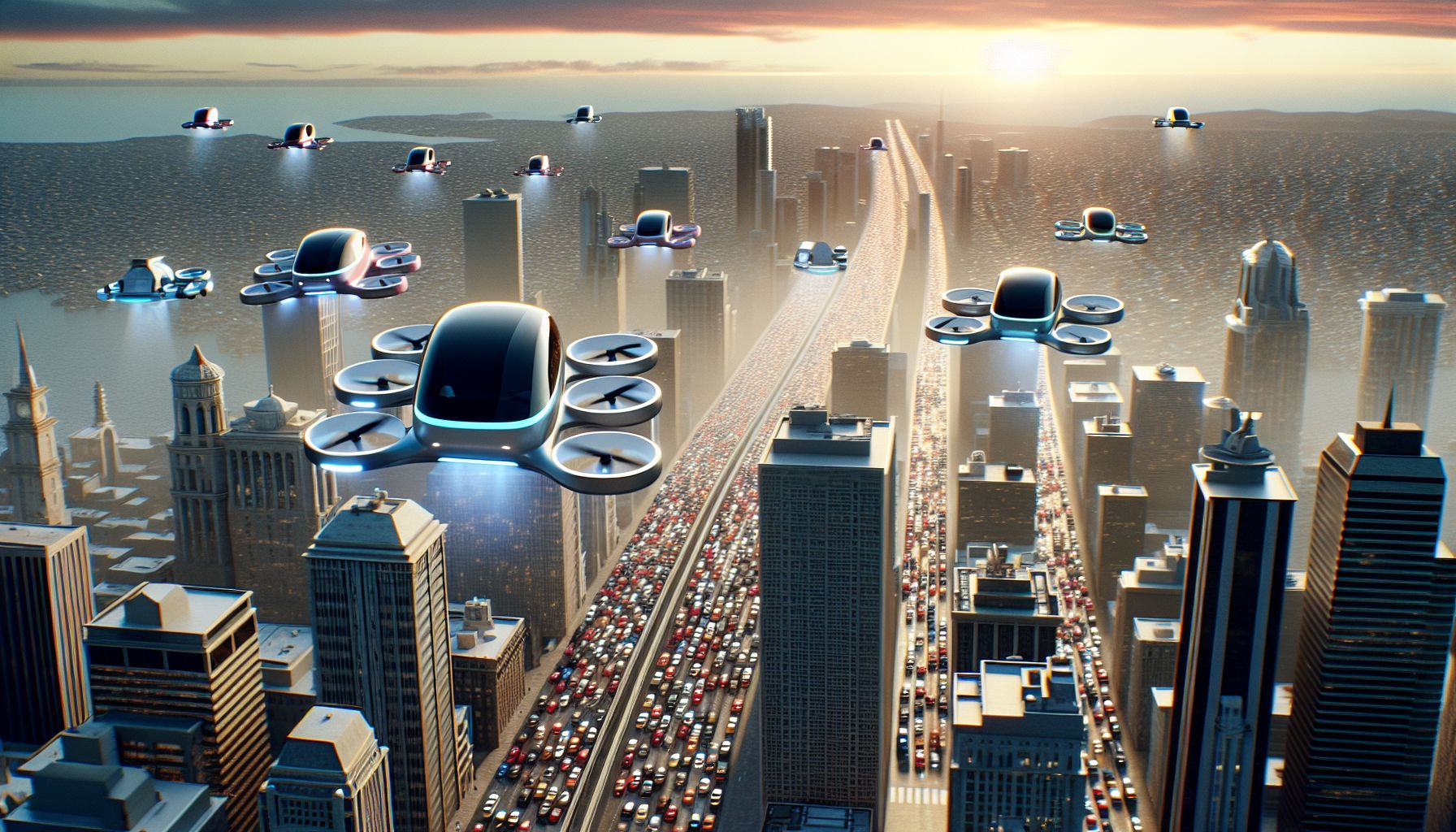
Hey there, fellow tech aficionados! Isn’t it great living in a world where our wildest science-fiction dreams seem to become everyday realities? Today, I’m going to spill the beans about a jaw-dropping development that’s set to redefine how we move: Urban Air Mobility or UAM for short. Imagine this: You’re seated behind your desk, looking up at the sky, and instead of mind-numbing traffic jams and red lights, you see sleek, autonomous air taxis zipping through the cityscape like birds. Unreal, right?
The Dawn of Urban Air Mobility
The buzz around flying cars has been around for decades, a staple in sci-fi movies and comic books. Not to point fingers, but The Jetsons and Back to the Future kind of set some high expectations! But guess what? We’re closer to this reality than ever, thanks to Urban Air Mobility. The idea is to introduce small, piloted, or autonomous aircraft for on-demand travel, especially in dense urban areas. No more getting stuck behind 3,000 fellow commuters on the freeway.
From Sci-Fi to Reality
You might be wondering, who’s leading this airborne revolution? Well, surprise, surprise—some of the usual suspects! Uber Elevate had been tinkering in the space (though Uber sold this tech to Joby Aviation), while folks at Airbus are developing their Vahana and CityAirbus projects. And wouldn’t you know it, even Porsche’s dabbling in flying taxis. Yep, your future ride could be as elegant as a Porsche takes to the skies!
Urban air mobility isn’t just about big names. It’s a collection of dreams powered by audacious startups and big corporations alike. So, fasten your seatbelts—if flying cars have those—and let’s explore these high-flying machines a little more.
Taking Urban Mobility to New Heights
Putting cities into the sky is no small feat. It’s like threading a needle while riding a unicycle. Complicated, to say the least. But worry not! The wizards in the lab coats are solving these problems, one at a time.
The Technological Blueprint
Urban Air Mobility combines technological advances like electrification, autonomy, and aero designs without compromising safety and efficiency. Modern aerial vehicles are light, might use rotors and wings, and (get this) could be even quieter than a diesel engine humming below.
The rise of electric Vertical Take-Off and Landing (eVTOL) vehicles has accelerated the UAM space. Imagine helicopters, but quieter and emission-free. Firms like Volocopter and Lilium are testing prototypes, showing off sustainability with electric motors and drastically lower noise profiles. So you won’t have a hovering plane ruining your Sunday brunch.
Autonomy and Air Traffic Management
Our skies, folks, aren’t like the open seas. Air traffic is highly regulated, and rightly so. Enter AI pilots and robust air traffic control systems. The challenge? Navigating crowded airspace while playing nice with existing infrastructure. Current air traffic systems are getting a major glow-up with cutting-edge AI and machine learning. The aim is to create synergistic air traffic management that won’t make human controllers sweat bullets when hundreds of air taxis zip around.
Expect AI deftly guiding multiple aircraft with precision that would put a Swiss watchmaker to shame. Imagine the software’s capability predicting worst-case scenarios and adjusting trajectories on-the-fly. Yup, that’s the future we’re talking about.
Gliding Through Roadblocks
While we fantasize about hitching a ride in one of these mechanical birds, practical realities still clip their wings a bit.
Infrastructure and Regulation Trials
Urban air mobility needs more than just cool gadgets. It needs a radical reimagining of urban infrastructure. Think vertiports—dedicated take-off and landing zones dotted around cities. These puppies need prudential placement and maintenance. Expect the landscape to start resembling some fancy futuristic city you’ve glimpsed in video games.
The elephant in the room is regulatory framework, though. With drones, jets, and air taxis all jostling for breathing space, aviation authorities are in a race against time to pen down regulations without stifling innovation. It’s complex to balance safety, security, privacy, and congestion. Like preparing a stew, it needs the right balance of ingredients. Or in this case, laws and innovation.
What Lies Ahead in Our Jet Packs?
Before you plant your feet on the ground (or sky), let’s venture into speculation territory. Suppose Urban Air Mobility isn’t just a flash in the pan. Then what? The implications extend far beyond a cool ride to work. Imagine the boon to industries like logistics, emergency response, and tourism.
Emergency services could whisk life-saving equipment directly to accident sites or hospitals in record time. The supply chain sector would dance a jig as urban areas receive supplies faster and more efficiently. Even tourists could enjoy unparalleled views, essentially sightseeing from a flying Walmart parking lot, but make it Vogue runway chic.
Conclusion
There’s no denying that Urban Air Mobility feels like a fairy tale. But it’s a tale that some of the brightest minds are writing today. It’s promising a future where innovative technology redefines how our societies function, where traffic congestion is the dinosaur that got the memo a little too late.
As tech enthusiasts (and let’s face it, eternal dreamers), we ought to keep our gaze upwards, both literally and figuratively. With innovation and investment pouring in, Urban Air Mobility is not just a pipe dream. It’s happening right above our heads, or it soon will be, anyway.
So the next time you look at the sky, take a moment to daydream. You might just catch a glimpse of the future in flight. Bon voyage on that upcoming air taxi ride! 🚁
Comments are Disabled