Monthly Archives: June 2025
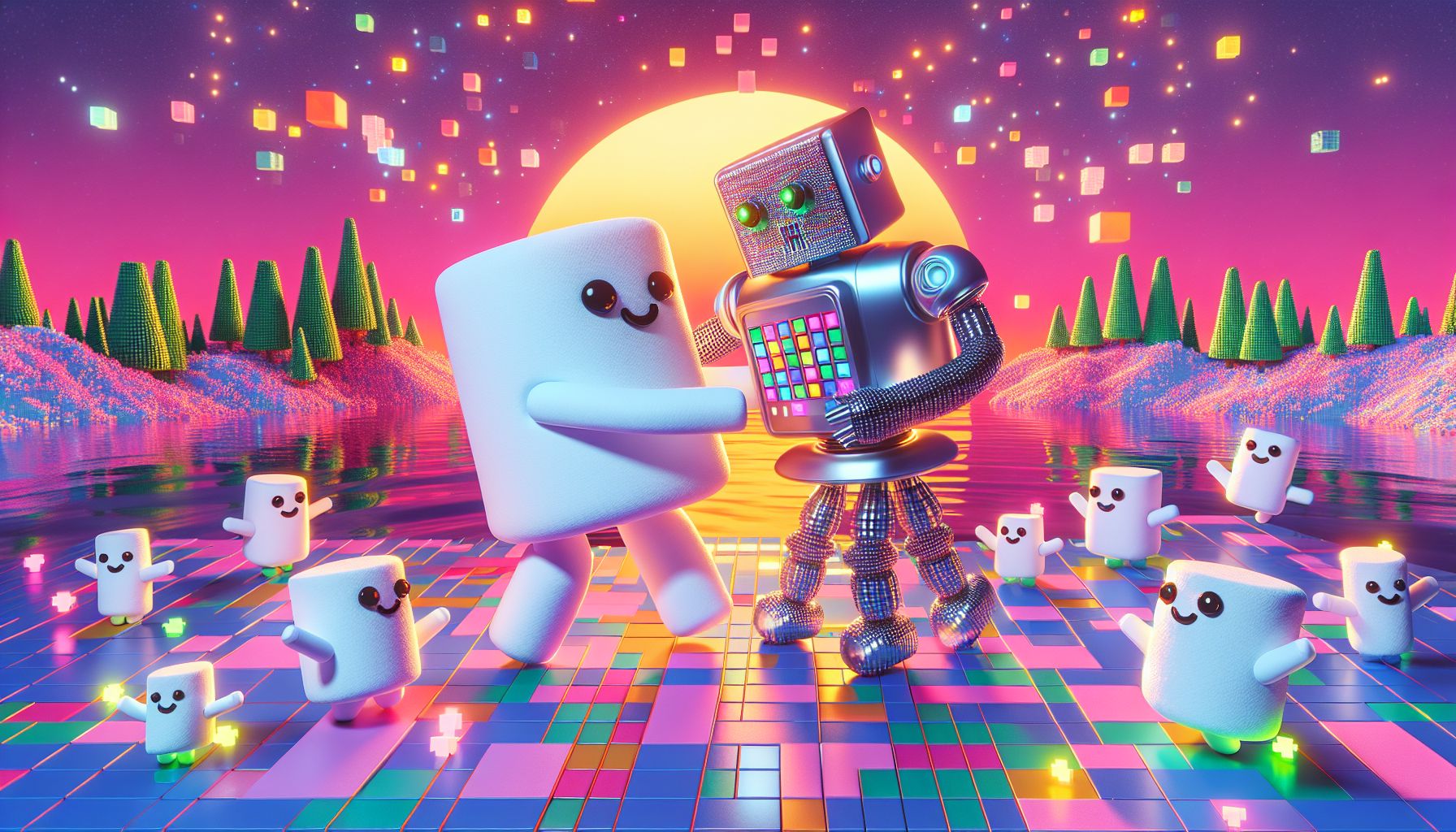
The Mallows Dance with AI: A Love Story in Pixels
Hey tech lovers, AI enthusiasts, and curious minds! Today, we’re diving into a realm where creativity meets computation—a space where paintbrushes meet processors. Yep, you guessed it! We’re talking about AI in creative arts. Picture this: an algorithm playing piano sonatas or bots drafting blueprints for jaw-dropping architecture. How did we get here, and where’s this ride taking us? Buckle up as we journey through the world of creative artificial intelligence!
Once Upon a Time: AI’s Creative Genesis
Let’s roll back the clock to a time when AI wasn’t quite Picasso with code. Initially, artificial intelligence was stuck doing data-heavy tasks—churning through spreadsheets, automating grunt work, and the like. But oh boy, how things have changed! Neural networks and deep learning algorithms brought us machines that don’t just compute numbers but “understand” art.
I remember attending my first AI art exhibit, expecting to see geometric patterns and static visuals. To my surprise, I stood before animated works with detailed narratives and color palettes that seemed to breathe with emotion. And that’s when it hit me: creativity isn’t a human monopoly anymore. The artists of the future could very well be silicon-based!
So, What’s the Brush and Canvas Here?
Let’s break down how art-loving algorithms operate. AI artists are typically built on neural networks—a digital web that mimics our brain’s synaptic connections. When an AI is trained on a dataset of artworks, it learns styles, techniques, and patterns found in those works. We’re talking Convolutional Neural Networks (CNNs) and Generative Adversarial Networks (GANs) doing the heavy lifting.
Take GANs, for example. They have two networks—the “generator” creates images from scratch, while the “discriminator” critiques them. It’s like having two competitive toddlers drawing on an Etch-a-Sketch, constantly trying to impress and outperform each other. The outcome? Characters that jump off the page and transform traditional storytelling into visually mesmerizing experiences.
The Players You Oughta Know
Here’s a shoutout to some heavy hitters in the AI creativity scene. OpenAI, the minds behind GPT-3, have jumped into visual arts with their DALL-E model. It doesn’t just paint—it creates entirely new concepts based on whatever bizarre prompt you throw its way. Imagine inputting “a surrealist manifestation of thyme flavored marshmallows dancing under moonlight” and actually getting a coherent visual!
Then there’s Artbreeder, an online platform that allows users to mix and match images using AI. You tweak facial features, landscapes—you name it, Artbreeder churns out unique works as if drawing from a collective hive mind of aspiring Vincent van Goghs.
Bringing AI Art to Your Friendly Neighborhood Gallery
So, what happens when AI’s creative work gets gallery spotlights? The marriage of ones and zeros and paint-stroked masterpieces is now a growing trend in the art world. And people are paying attention—nothing short of a Christopher Nolan plot twist!
Here’s where I see a big shift happening: putting AI into our creative work can democratize art. Artists, regardless of skill level, can explore, produce, and share creative content. Imagine a kid with a wild imagination but minimal resources now composing symphonies or designing fashion collections, all with a little help from an AI buddy.
Flying Solo: The Co-Creator Debate
Before we crown AI as the creative overlord, let’s chew over a couple of problems. The tricky question of authorship surfaces when an AI creates art. Who claims the creative rights—programmers, users, or dare I say, the AI itself? Laws around intellectual property are still trying to figure out who gets the credit.
And what about originality? Some critics argue that AI can only mimic, never truly innovate. But if you ask me, isn’t all art in some way derivative? We stand on the shoulders of giants, remixing and reinterpreting what came before us, be it human or algorithm.
The Horizon Ahead: What’s Next?
The future of AI in creative arts is both thrilling and unpredictable. Will we have autonomous AI authors joining the Writers Guild of America or AI curators hosting the next MoMA exhibit? I for one am optimistic! I picture a world where human creativity and AI’s procedural prowess combine to create art forms we can hardly imagine today.
Here’s a little speculative tidbit for you: What if AI could help us experience art in new dimensions—not just visually or audibly but emotionally through tactile interfaces or virtual reality? Picture stepping into a Monet, feeling the breeze and scent of water lilies. Talk about immersion in 4D!
Signing Off with a Painter’s Flourish
AI and art will continue to evolve, intertwining more beautifully and complexly than a double helix. Whether it’s helping us paint our Mona Lisas or compose our moonlight sonatas, things are getting pretty creative.
So, there you have it, fellow dreamers! The intersection of AI and creative arts is a wild mosaic, endlessly shifting, recombining, and showing us fresh perspectives on what creativity means. Keep tinkering, coding, and dreaming—it’s going to be one heck of a masterpiece.
Until next time, keep your RAM refreshed and your canvases ready!
Related: Welcome to the Quantum Age: The Rise of Quantum Computing
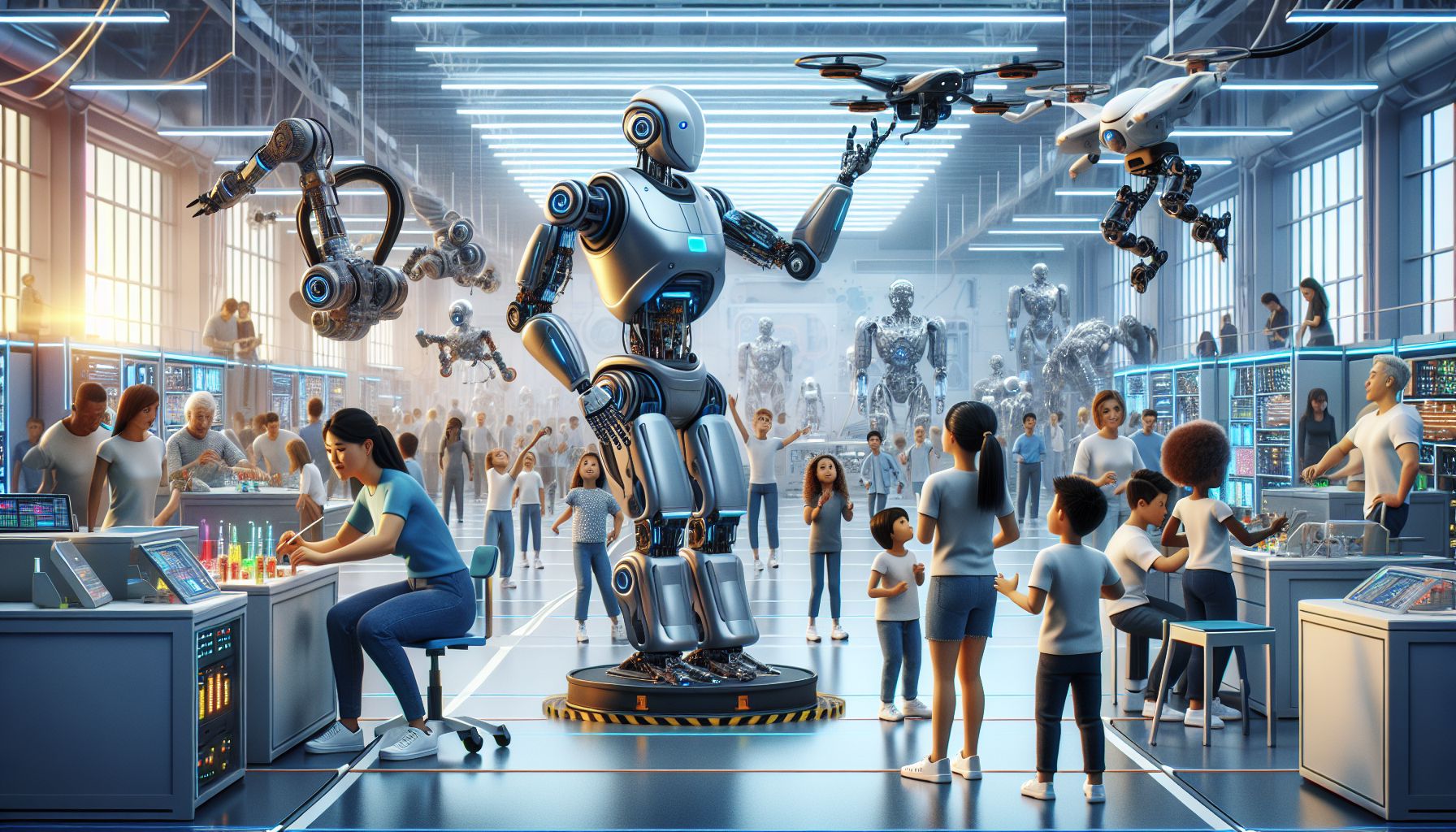

The Robopocalypse Never Came: Embracing the Age of Collaborative Robotics
Hey there, fellow tech enthusiasts! Today, we’re diving into one of the most exciting, and honestly, kinda adorable, advancements in technology—collaborative robotics, or as we insiders like to call them, cobots. Unlike their intimidating cousins from science fiction, these little guys are here to be your buddy, your partner in crime, your… okay, maybe not crime, but you get the picture.
What Are Cobots, Anyway?
Let’s start with a quick primer. Cobots are nothing like the lumbering metal giants you might imagine when thinking of “robots.” Built to work safely alongside humans in a shared workspace, these machines are the best team players you’ll ever meet. They bring precision and stamina where human arms might tire and mess up, but they have zero Skynet-like ambitions.
Cobots aren’t out to steal jobs. They’re here to help us work smarter, not harder. Picture a tiny robot hand passing you a wrench while you tinker with a car engine or a robotic arm that lifts heavy boxes so your back doesn’t scream at you later. This isn’t some far-off future scenario. It’s happening right now.
The Real-World Marvels of Cobot Deployment
Boosting Productivity
Let’s talk productivity. Have you ever felt that mid-afternoon slump when the coffee wears off, and the to-do list just seems to grow? Well, cobots don’t need coffee breaks, and they won’t corner you with endless small talk about last night’s game. Call me antisocial, but there’s something really appealing about working with someone (or something) that’s laser-focused.
Manufacturing floors around the world already use cobots to streamline operations. By taking over repetitive tasks, these clever devices let humans focus on what we do best: creative problem-solving and strategic thinking. I heard about a small factory in Denmark where cobots cut production time by half, simply because they never get tired. Something my old college self could’ve really used during finals, if you know what I mean.
Creating Safer Work Environments
Now, I know what you’re thinking. Aren’t machines prone to glitches? I get it. It’s easy to picture rogue robots going haywire. But cobots are carefully designed with safety features that often beat human reflexes. They have sensors and AI to detect and gently halt if an unsuspecting human wanders into their work zone. It’s like walking into an invisible airbag, or maybe more like doing the robot dance and hitting pause before stepping on your dance partner’s shoes.
Democratizing Automation
Here’s the kicker: cobots are making automation accessible to businesses that never dreamed they could afford cutting-edge tech. They cost way less than their industrial robot cousins, making them perfect for startups and small-to-medium businesses. It’s kind of like having a personal assistant but without the executive salary. More budget-friendly and less likely to ask for time off to backpack through Europe.
The Challenges: Setting Our Expectations
But hey, it’s not all sunshine and rainbows in cobot-land. Like any technology, there are hurdles. One of the biggest is getting cobots to fit smoothly into existing workflows. It’s like getting a new puppy—super exciting, but you need to figure out how they fit into your daily routine without chewing up your slippers.
Plus, there’s the need for ongoing training and adaptation. Humans need to get comfortable with robotic co-workers, and cobots need constant software updates. Imagine your office IT guy, but for robots and with probably less need to remind them to “Have you tried turning it off and on again?”
Cobots on the Horizon: A Look at What’s Next
Looking ahead, the potential for cobots seems as limitless as human imagination itself. Picture machines that not only handle physical tasks but also boost creative and intellectual work. We’re talking about cobots helping writers brainstorm or guiding surgeons in delicate procedures, amplifying their skills rather than replacing them.
Companies like Universal Robots and Rethink Robotics are leading research in making cobots more intuitive and flexible. It’s an exciting field that blends AI, machine learning, sensor technology, and a dash of science fiction, just without the dystopia.
Conclusion: Is the Future of Work… Friendly?
To wrap it all up, collaborative robotics represent a tech dream that doesn’t come with the anxiety of being replaced but promises a future where technology complements human abilities. Picture a world where labor isn’t back-breaking but rather a collaborative effort with our mechanical friends.
So, where does this leave us? The age of co-working with robots isn’t a tale to watch unfold. It’s a story we’re actively writing right now. Whether you’re an engineer, artist, or entrepreneur, the cobot revolution invites us all to rethink what’s possible when human creativity partners with tireless technology.
Until next time, keep daydreaming about the future and maybe consider how a cobot sidekick could change your routine for the better. Who knew that in the world of innovation, companionship would come with a plastic and metal smile? Cheers!
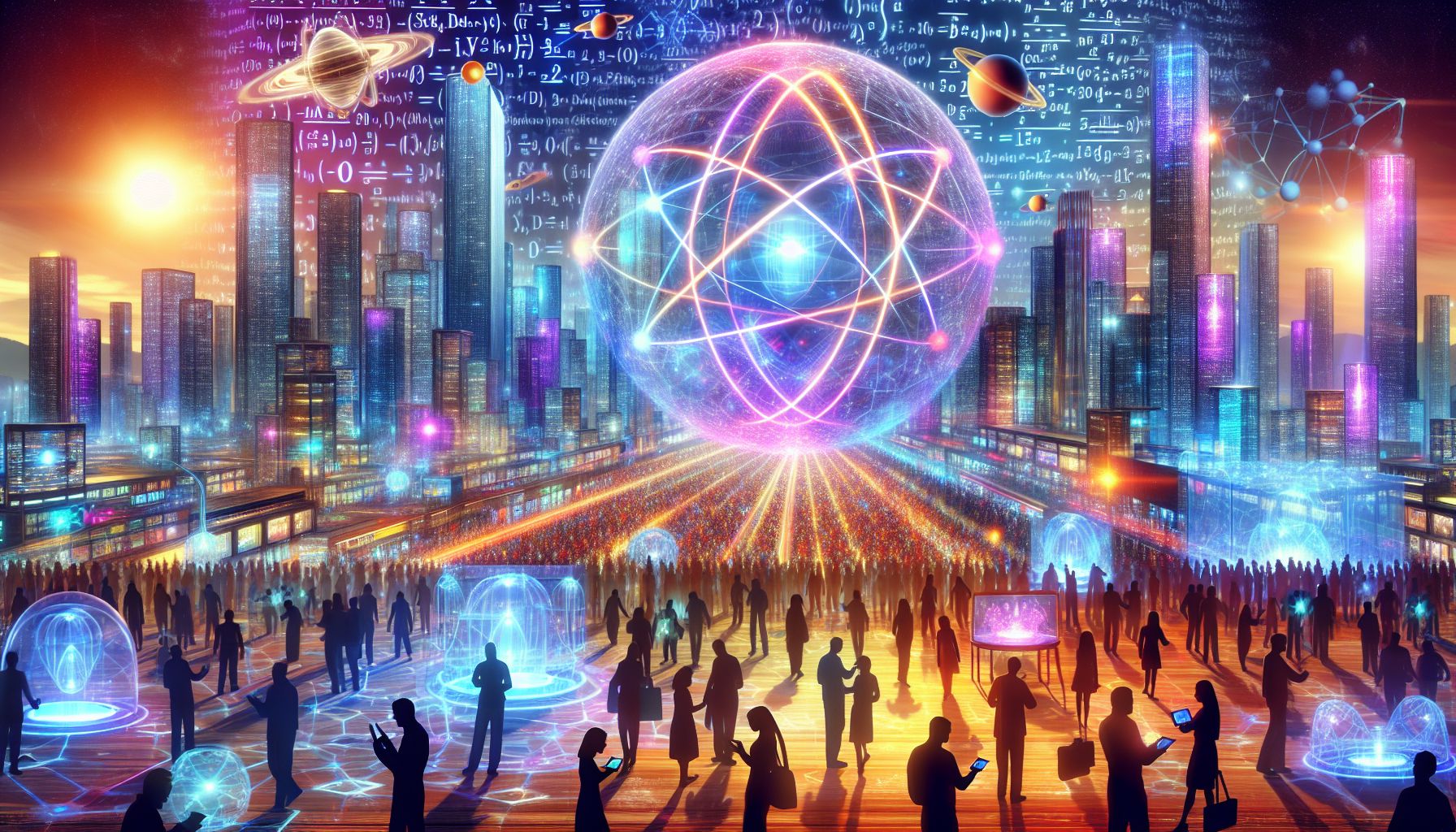

the Quantum Age: The Rise of Quantum Computing
Hey there tech enthusiasts! Today, we’re jumping into a world that seems ripped from the pages of science fiction: quantum computing. If you think traditional silicon-based computers are as good as it gets, you’re in for a surprise. We’re looking at something that could completely change how we think about computation. So let’s dig in!
The Basics: From Bits to Qubits
Let me start with what makes quantum computers so different from regular computers. Traditional computers use bits as the smallest unit of data (those 0s and 1s you’ve heard about), but quantum computers use qubits. You might be thinking, “What’s the big deal with a qubit?” Picture a coin that doesn’t just show heads or tails, but somehow both at the same time. This happens because of something called superposition. With superposition, qubits can explore multiple possibilities all at once. It’s like comparing a race car to a horse and buggy when it comes to solving complex problems.
Then there’s entanglement, which honestly still blows my mind. Two or more qubits become connected in such a way that changing one instantly affects the others, no matter how far apart they are. Einstein called it “spooky action at a distance,” and I can’t think of a better description.
Entanglement and Quantum Supremacy
I love a good competition story, and quantum computing has plenty of drama. In 2019, Google claimed they achieved “quantum supremacy” with their Sycamore processor. They performed a calculation in 200 seconds that would have taken a classical supercomputer about 10,000 years. That’s like going from building furniture with a screwdriver to 3D printing an entire house.
But IBM and other companies weren’t impressed, pointing out that quantum supremacy isn’t the magic solution to everything. This back-and-forth makes quantum computing feel less like dry technical progress and more like watching a really nerdy sports rivalry.
Industrial Impacts: From Pharma to Finance
So what can we actually do with these machines? The applications are pretty wild. Pharmaceutical companies could simulate molecular interactions with incredible precision, potentially leading to breakthroughs for diseases that have stumped us for decades.
In finance, quantum algorithms could create trading systems that make today’s high-frequency trading look sluggish, or optimize investment portfolios in ways we can barely imagine. Industries that have been stuck waiting for computers to crunch numbers might finally get the horsepower they need.
Challenges: Not All Sunshine and Quantum Rainbows
But let’s be real about the problems. Quantum computing isn’t some magical fix-everything solution. Qubits are incredibly temperamental and need to be kept at temperatures near absolute zero to work properly. You can’t exactly install a quantum computer in your basement like you would a regular server.
There’s also the issue of error rates. Qubits lose their quantum properties when they interact with the environment, which happens constantly. It’s called quantum decoherence, and it means we’re still years away from reliable, large-scale quantum computers.
Looking Ahead: The Quantum Future
What might the future actually look like? I picture real-time language translation happening instantly in your earbuds, AI systems that can predict and help prevent global disasters, and advances in artificial intelligence that seem almost magical today.
Companies like Rigetti, IBM, and Microsoft are pouring billions into quantum research. Maybe quantum computing will become as common as smartphones. Or maybe we’ll discover fundamental limitations that keep it confined to specialized labs. The honest truth is that we don’t know yet, and anyone claiming they do is probably selling something.
Conclusion: Keep It Real, Quantum
Quantum computing is genuinely exciting, but it’s also overhyped in a lot of ways. As people who care about technology, we need to watch how this develops without getting caught up in either the hype or the skepticism. The reality will probably be somewhere in between the breathless predictions and the dismissive critiques.
Whether you’re excited about solving impossible math problems or just curious about where technology is headed, we’re definitely entering an interesting period. I’m optimistic, but I’m also keeping my expectations realistic. That seems like the best approach when dealing with something this complex and uncertain.