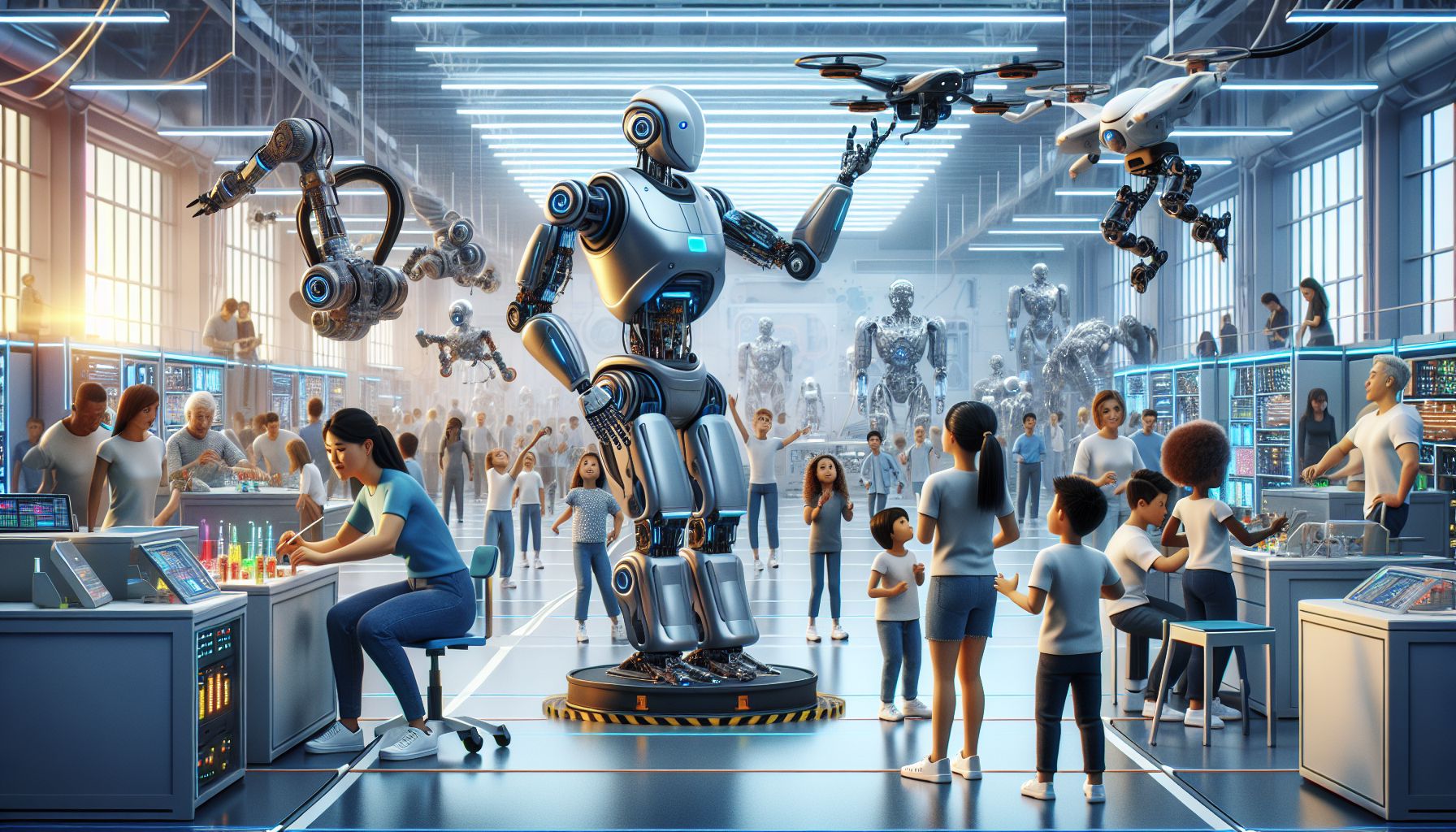

The Robopocalypse Never Came: Embracing the Age of Collaborative Robotics
Hey there, fellow tech enthusiasts! Today, we’re diving into one of the most exciting, and honestly, kinda adorable, advancements in technology—collaborative robotics, or as we insiders like to call them, cobots. Unlike their intimidating cousins from science fiction, these little guys are here to be your buddy, your partner in crime, your… okay, maybe not crime, but you get the picture.
What Are Cobots, Anyway?
Let’s start with a quick primer. Cobots are nothing like the lumbering metal giants you might imagine when thinking of “robots.” Built to work safely alongside humans in a shared workspace, these machines are the best team players you’ll ever meet. They bring precision and stamina where human arms might tire and mess up, but they have zero Skynet-like ambitions.
Cobots aren’t out to steal jobs. They’re here to help us work smarter, not harder. Picture a tiny robot hand passing you a wrench while you tinker with a car engine or a robotic arm that lifts heavy boxes so your back doesn’t scream at you later. This isn’t some far-off future scenario. It’s happening right now.
The Real-World Marvels of Cobot Deployment
Boosting Productivity
Let’s talk productivity. Have you ever felt that mid-afternoon slump when the coffee wears off, and the to-do list just seems to grow? Well, cobots don’t need coffee breaks, and they won’t corner you with endless small talk about last night’s game. Call me antisocial, but there’s something really appealing about working with someone (or something) that’s laser-focused.
Manufacturing floors around the world already use cobots to streamline operations. By taking over repetitive tasks, these clever devices let humans focus on what we do best: creative problem-solving and strategic thinking. I heard about a small factory in Denmark where cobots cut production time by half, simply because they never get tired. Something my old college self could’ve really used during finals, if you know what I mean.
Creating Safer Work Environments
Now, I know what you’re thinking. Aren’t machines prone to glitches? I get it. It’s easy to picture rogue robots going haywire. But cobots are carefully designed with safety features that often beat human reflexes. They have sensors and AI to detect and gently halt if an unsuspecting human wanders into their work zone. It’s like walking into an invisible airbag, or maybe more like doing the robot dance and hitting pause before stepping on your dance partner’s shoes.
Democratizing Automation
Here’s the kicker: cobots are making automation accessible to businesses that never dreamed they could afford cutting-edge tech. They cost way less than their industrial robot cousins, making them perfect for startups and small-to-medium businesses. It’s kind of like having a personal assistant but without the executive salary. More budget-friendly and less likely to ask for time off to backpack through Europe.
The Challenges: Setting Our Expectations
But hey, it’s not all sunshine and rainbows in cobot-land. Like any technology, there are hurdles. One of the biggest is getting cobots to fit smoothly into existing workflows. It’s like getting a new puppy—super exciting, but you need to figure out how they fit into your daily routine without chewing up your slippers.
Plus, there’s the need for ongoing training and adaptation. Humans need to get comfortable with robotic co-workers, and cobots need constant software updates. Imagine your office IT guy, but for robots and with probably less need to remind them to “Have you tried turning it off and on again?”
Cobots on the Horizon: A Look at What’s Next
Looking ahead, the potential for cobots seems as limitless as human imagination itself. Picture machines that not only handle physical tasks but also boost creative and intellectual work. We’re talking about cobots helping writers brainstorm or guiding surgeons in delicate procedures, amplifying their skills rather than replacing them.
Companies like Universal Robots and Rethink Robotics are leading research in making cobots more intuitive and flexible. It’s an exciting field that blends AI, machine learning, sensor technology, and a dash of science fiction, just without the dystopia.
Conclusion: Is the Future of Work… Friendly?
To wrap it all up, collaborative robotics represent a tech dream that doesn’t come with the anxiety of being replaced but promises a future where technology complements human abilities. Picture a world where labor isn’t back-breaking but rather a collaborative effort with our mechanical friends.
So, where does this leave us? The age of co-working with robots isn’t a tale to watch unfold. It’s a story we’re actively writing right now. Whether you’re an engineer, artist, or entrepreneur, the cobot revolution invites us all to rethink what’s possible when human creativity partners with tireless technology.
Until next time, keep daydreaming about the future and maybe consider how a cobot sidekick could change your routine for the better. Who knew that in the world of innovation, companionship would come with a plastic and metal smile? Cheers!
Comments are Disabled