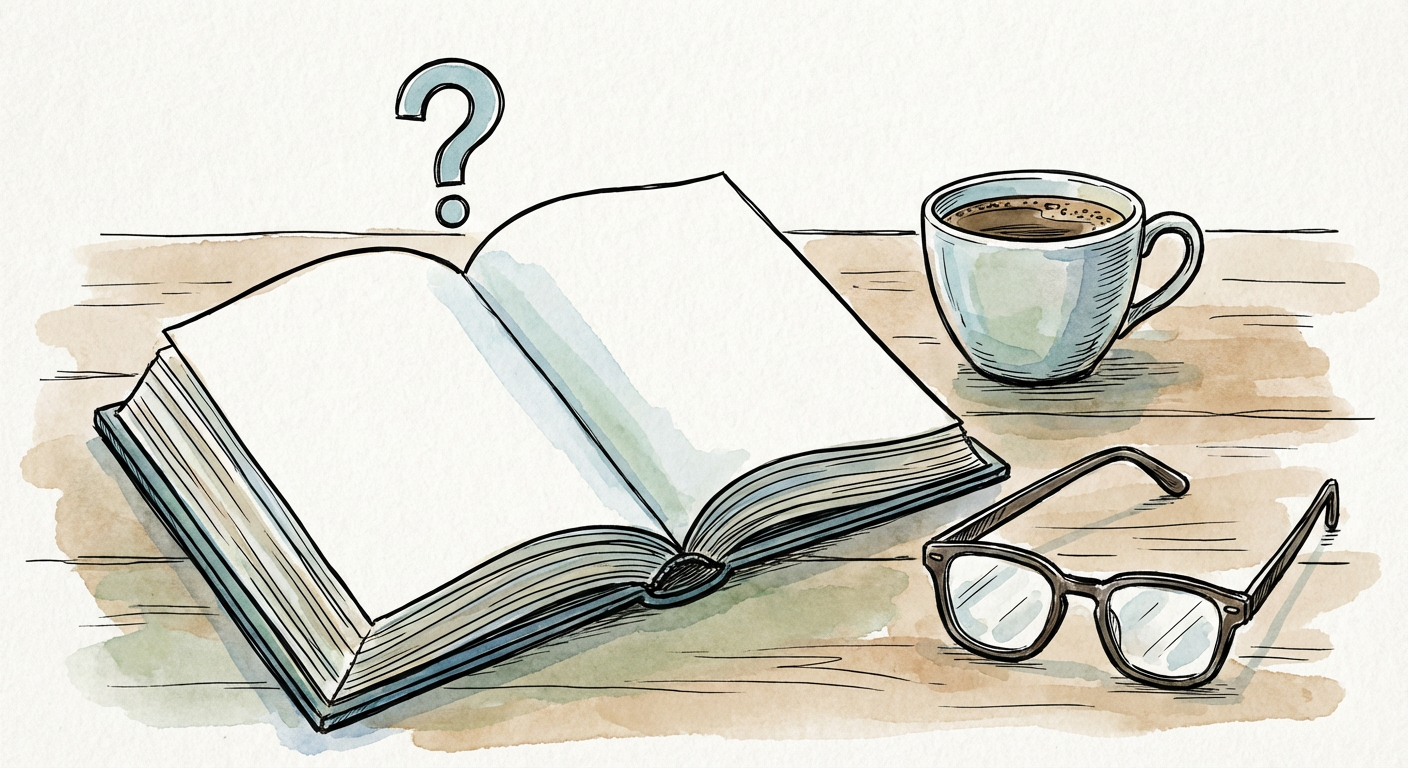
The Books That Broke My Brain This Year (And Why I’m Still Picking Up the Pieces)
When Everything You Think You Know About Motivation Gets Flipped
I spent the first half of this year absolutely convinced I understood how change worked. Read the right books, implement the systems, track the habits, celebrate the small wins. Daniel Pink had taught me about autonomy, mastery, and purpose. James Clear had shown me the compound effect of tiny improvements. I was swimming in productivity porn and loving every minute of it.
Then I picked up “The Myth of Normal” by Gabor Maté, and he basically took everything I thought I knew about human behavior and set it on fire. Maté doesn’t just challenge the idea that we can think our way into better lives. He destroys it. He argues that most of our struggles with motivation, focus, and self-control aren’t personal failings or system problems. They’re trauma responses. Our bodies and minds trying to protect us from a world that taught us we weren’t safe being ourselves.
I remember sitting in my kitchen at 2 AM, three weeks into reading this book, having what can only be described as an existential crisis. Every productivity hack I’d ever tried suddenly felt like putting a bandaid on a broken bone. The voice in my head that constantly pushed for more optimization, better systems, cleaner metrics? Maté was saying that voice might be the problem, not the solution. I closed the book and stared at my carefully color-coded habit tracker, wondering if I’d been trying to engineer my way out of being human.
The Science Book That Made Me Question Science
“The Trouble with Physics” by Lee Smolin should have been a straightforward read about theoretical physics. Instead, it became a meditation on how even our most rigorous institutions can get trapped in their own assumptions. Smolin, himself a theoretical physicist, argues that string theory has dominated physics for decades not because it works, but because it’s become intellectually fashionable. Entire careers get built on pursuing elegant mathematics that may have nothing to do with reality.
What hit me wasn’t the physics. It was recognizing the same pattern in my own field. How many marketing strategies have I pursued because they sounded sophisticated rather than because they actually moved the needle? How many times have I chosen the complex solution over the obvious one because complexity felt more professional? Smolin’s book forced me to face an uncomfortable truth: expertise can become its own trap when we start optimizing for looking smart rather than being effective.
The really unsettling part was realizing this applies to everything. Personal development, business strategy, even relationships. We often choose the approach that makes us feel knowledgeable rather than the one that actually works. Reading Smolin felt like getting glasses for the first time and discovering how much I’d been squinting at the world without realizing it.
Fiction That Rewired My Understanding of Time
“Klara and the Sun” by Kazuo Ishiguro wasn’t supposed to teach me anything practical. It’s literary fiction about an artificial friend observing a family from the margins. But Ishiguro’s choice to tell the story from Klara’s perspective created something I wasn’t prepared for: a completely different relationship with time and attention.
Klara notices everything because she doesn’t take anything for granted. She observes the way sunlight moves across a room with the same intensity that she watches human emotions play across faces. There’s no hierarchy in her attention. The mundane and the profound get equal weight. Reading through her eyes for 300 pages did something strange to my brain. It slowed me down in a way that felt almost physical.
I started noticing things I’d been walking past for years. The way my neighbor’s dog always sniffs the same corner of the fence. How the light in my office changes throughout the day. The particular expression my partner gets when she’s thinking through a problem. None of this was profound or life-changing in any dramatic sense. But it shifted something fundamental about how I move through the world. Ishiguro didn’t teach me to be more mindful. He taught me that mindfulness might be less about meditation techniques and more about approaching ordinary moments with genuine curiosity.
The Technical Manual That Changed How I Think About Everything
“Thinking in Systems” by Donella Meadows is supposedly about systems theory. In practice, it’s about recognizing that almost everything we try to change exists within webs of relationships that we rarely see clearly. Meadows shows how pushing on one part of a system often creates unexpected reactions somewhere else. She explains why quick fixes usually make things worse in the long run, and why the most effective changes often happen at points that seem completely unrelated to the problem we’re trying to solve.
This book didn’t just change how I approach work problems. It changed how I think about everything from family dynamics to political debates. That project that keeps getting stuck? Instead of pushing harder on the obvious bottleneck, I started looking for the incentive structures and feedback loops that might be creating the bottleneck in the first place. That relationship conflict that keeps recurring? Instead of focusing on who’s right, I started asking what patterns we might be unconsciously maintaining.
The most practical insight was Meadows’ idea that the highest leverage point in any system is the paradigm or shared idea out of which the system comes. You can change policies, processes, and structures all day long. But if the underlying assumptions don’t shift, the system will keep producing the same results. This sounds abstract until you start seeing it everywhere. Every stuck project, every repeated argument, every habit you can’t seem to change probably has a paradigm problem hiding underneath.
What These Books Left Me With
I started this year thinking I was collecting tools and insights. I ended it realizing I was tearing down assumptions I didn’t even know I had. These books didn’t give me answers as much as they gave me better questions. They didn’t make me more confident in my approaches. They made me more curious about what I might be missing.
The strange thing about reading books that genuinely shift your thinking is that you can’t unsee what they’ve shown you. Maté’s trauma lens, Smolin’s institutional critique, Ishiguro’s attention training, Meadows’ systems thinking. They’ve become permanent parts of how I process new information. Sometimes this feels overwhelming. Most of the time it feels like finally having the right prescription glasses after years of squinting.
I’m curious what books have done this for you. Not the ones that confirmed what you already believed or gave you better ways to express your existing thoughts. The ones that made you question things you took for granted. The ones that left you sitting in your kitchen at 2 AM, staring at your carefully constructed assumptions and wondering what else you might have gotten wrong.
Comments are Disabled