Posts in Category: Uncategorized
The Profound Art of Writing Your Way to Clarity: Why Your Inner Life Deserves Better Than Social Media Posts
Your Mind Is Not a Performance Space
We’ve become curators of our own existence, crafting highlight reels for audiences we barely know while our actual thoughts sit there, unexamined. The irony hits hard: we document every meal and mood swing for strangers online, yet we rarely sit with our own experiences long enough to understand what they mean. This is exactly why journaling has made a comeback as both rebellion and refuge in our hyperconnected age.
The practice is deceptively simple. You sit down with pen and paper, or open a blank document, and you write. Not for likes, not for shares, not for anyone but yourself. You write to discover what you think, to process what you feel, and to make sense of the beautiful mess that is human experience. In a world obsessed with external validation, journaling is an act of internal revolution.
I’m recommending this with enthusiasm born from personal transformation. If you find yourself scrolling mindlessly through social feeds, wondering where your time and mental clarity have gone, journaling offers a pathway back to yourself. It’s especially powerful for those who feel overwhelmed by the pace of modern life, who crave deeper connection with their own thoughts and experiences, and who want to develop a more intentional relationship with their inner world.
The Science Behind the Sanctuary
Research backs up what many practitioners have long known intuitively. Studies show that regular journaling reduces cortisol levels, the stress hormone that wreaks havoc on our bodies and minds when chronically elevated. The act of translating experiences into words appears to calm the nervous system, creating space between stimulus and response that allows for clearer thinking and better decision-making.
Even more compelling is the evidence around working memory improvements. When we write about our experiences, we basically download mental clutter onto the page, freeing up cognitive resources for present-moment awareness and creative problem-solving. The brain, it seems, functions better when it knows important thoughts and feelings have been captured and preserved somewhere safe.
The specific practice of gratitude journaling has generated the most robust research findings in positive psychology. Randomized controlled trials consistently show that people who write about things they appreciate experience measurable improvements in mood, sleep quality, and overall life satisfaction. The practice works not because it creates artificial positivity, but because it trains attention toward what’s already working in our lives.
Beyond Bullet Points: Finding Your Own Way
The bullet journaling phenomenon has spawned a $200 million market in specialty notebooks, pens, and planning systems. While the aesthetic appeal and organizational structure of bullet journaling draws many practitioners, the real value lies not in perfect layouts or Instagram-worthy spreads, but in the consistent practice of externalizing thoughts and tracking patterns over time.
Your journaling practice doesn’t need elaborate systems or expensive supplies. Some people thrive with structured prompts and daily check-ins. Others prefer stream-of-consciousness morning pages that dump mental debris before the day begins. Still others find meaning in evening reflections that process the day’s events and extract lessons for future growth.
The key is experimentation without judgment. Try different approaches until you find what resonates. The practice should feel like coming home to yourself, not like another item on your productivity checklist. James Clear habit building principles apply beautifully here: start small, stay consistent, and focus on identity over outcomes.
The Therapeutic Revolution in Your Pocket
Therapy-adjacent journaling prompts have exploded across social media platforms, generating millions of views as people hunger for tools to understand themselves better. While these prompts can provide helpful starting points, the real therapeutic value emerges through sustained practice rather than viral moments of insight.
Consider prompts that invite deeper exploration: What patterns do I notice in my relationships? When do I feel most like myself? What beliefs about the world do I hold without questioning? How has my understanding of success evolved over time? These questions can’t be answered in a single session but reveal their wisdom through repeated engagement over months and years.
The therapeutic benefit comes not from finding perfect answers but from developing the muscle of self-inquiry. Each journaling session strengthens your capacity to observe your own thoughts and feelings with curiosity rather than judgment, creating the foundation for lasting personal growth.
Reclaiming the Personal Narrative
We’re witnessing a renaissance in personal writing as people reclaim their narratives from social media algorithms. Long-form personal essays are finding appreciative audiences on platforms like Substack and Ghost, where depth trumps virality and authentic voice matters more than follower count. Writers are rediscovering the power of sustained reflection and the joy of crafting thoughts into coherent stories.
This movement extends beyond professional writers to anyone seeking more meaningful engagement with their own experience. The Marginalian long-form writing shows this approach in action, demonstrating how personal reflection can become a gift to others when shared with care and intention.
Your journal might remain private forever, or it might become the foundation for essays, letters, or conversations that connect you more deeply with others. The practice itself creates the conditions for authentic expression, regardless of whether that expression ever finds a public audience.
The invitation here is simple but transformative: give yourself the gift of sustained attention. Start with ten minutes, a blank page, and whatever is true for you in this moment. Notice what emerges when you create space for your own voice to be heard. Your inner life is worth more than fleeting social media engagement. It deserves the full richness of exploration that only you can provide.
The Quiet Revolution: How We Learned to Work Less and Think More
The Death of Always-On Culture
Something shifted in our collective consciousness around productivity, and we’re still feeling the aftershocks. The term “quiet quitting” emerged in 2022, but four years later it continues to shape workplace conversations in ways that would have seemed impossible during the height of hustle culture. What started as a social media trend turned into a fundamental questioning of work’s role in our lives.
The numbers tell a story that contradicts decades of conventional wisdom about productivity. More than sixty companies have now participated in four-day work week trials, and the results consistently show either neutral or positive impacts on actual output. This isn’t just about employee satisfaction or retention, though those metrics improved dramatically. The data suggests our assumptions about the relationship between hours worked and value created were wrong.
Most telling is how quickly anti-meeting cultures have spread beyond their origins in tech companies like Basecamp and Signal. The idea that meetings are productivity poison moved from startup manifestos to corporate policy documents. Organizations discovered that time previously spent in conference rooms could be redirected toward deep work, strategic thinking, and focused effort that actually moves projects forward.
The Rise of Personal Knowledge Systems
While companies wrestle with meeting overload and work-life boundaries, individuals have been quietly building their own productivity ecosystems. Tools like Obsidian and Notion reached millions of users, not because they promise faster output, but because they offer something more valuable: clarity of thought. These platforms represent a shift from productivity as speed to productivity as understanding.
The appeal of personal knowledge management systems goes deeper than organizational efficiency. They reflect a growing recognition that our brains aren’t designed to hold infinite amounts of information, and that external systems can free up mental resources for creative and analytical work. This insight aligns with principles found in Cal Newport productivity writing, which emphasizes the importance of cognitive space over time management tricks.
What’s particularly striking is how these tools encourage connection and synthesis rather than simple task completion. Users report that building knowledge networks helps them see patterns and relationships they might have missed when information was scattered across different platforms. The productivity benefit isn’t about doing more things faster. It’s about thinking more clearly about which things matter most.
The Counter-Revolution Against Digital Overwhelm
Parallel to the workplace productivity revolution, a quieter movement has been gaining momentum in how we interact with technology itself. Dopamine detoxes and digital minimalism evolved from niche practices to mainstream conversations about attention and focus. The recognition that our devices are designed to capture and monetize our attention led to a more intentional approach to technology use.
This shift represents more than just individual lifestyle choices. It reflects a growing understanding that productivity isn’t just about managing time and tasks, but about protecting and directing our attention. The World Health Organization’s recognition of burnout as an occupational phenomenon in 2019 provided institutional validation for what many had experienced personally: constant connectivity and availability were creating genuine health problems.
The most interesting aspect of the digital minimalism movement is how it intersects with deeper questions about meaning and purpose. When people reduce their digital consumption, they often discover their previous productivity struggles weren’t about efficiency or time management, but about clarity of values and priorities. The space created by stepping back from digital noise allows for the kind of reflection that leads to more intentional choices about how to spend time and energy.
Beyond Individual Optimization
The anti-hustle movement revealed something important about productivity itself. The traditional approach treated productivity as an individual optimization problem, something to be solved through better tools, techniques, or habits. But the most significant changes have been systemic rather than personal. When companies eliminate unnecessary meetings, when teams adopt asynchronous communication practices, when individuals build external knowledge systems, the improvements come from changing the environment rather than trying harder within existing constraints.
This environmental approach to productivity aligns with insights from behavioral economics and cognitive science. The recognition that willpower is finite and that context shapes behavior led to strategies focused on designing better systems rather than relying on individual discipline. The most effective productivity interventions change the default options rather than demanding constant conscious choice.
The influence of thoughtful writing about work and creativity, such as Paul Graham essays, helped shift conversations from tactical optimization to strategic thinking about how knowledge work actually happens. This broader perspective helps explain why surface-level productivity hacks often fail while deeper systemic changes create lasting improvement.
What We’re Still Learning
The most honest assessment of where we are with productivity culture is that we’re in the middle of a large-scale experiment. The old assumptions about work, attention, and output have been challenged, but new stable patterns haven’t yet emerged. Different organizations and individuals are trying different approaches, and the results are still being evaluated.
What seems clear is that the one-size-fits-all approach to productivity was always flawed. The anti-hustle movement created space for more nuanced conversations about what effective work actually looks like in different contexts and for different types of people. Some thrive with minimal structure and maximum autonomy. Others need clear boundaries and defined systems. The goal isn’t to find the single best approach, but to develop better ways of matching methods to individuals and situations.
The challenge moving forward isn’t about choosing between hustle culture and anti-hustle alternatives, but about building more thoughtful and sustainable approaches to work and creativity. This requires ongoing experimentation, honest assessment of what’s working, and willingness to adjust when circumstances change. The conversation is far from over, and your own experiences with these shifts probably reveal aspects that broader trend analysis misses entirely.

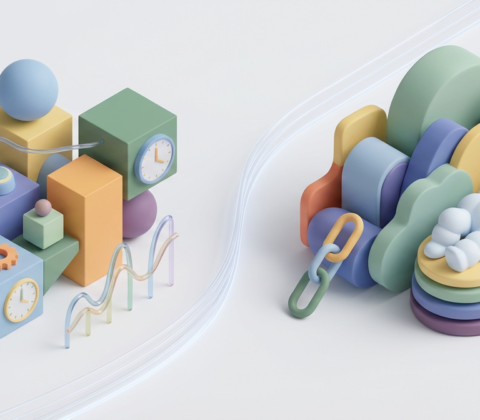
The Productivity Paradox: Why Anti-Hustle Culture Might Be Making Us Less Human
The Great Productivity Rebellion Has Already Won
The term “quiet quitting” exploded in 2022 as workers started refusing to go above and beyond their job descriptions. Four years later, it still drives workplace conversations everywhere. What began as a social media movement has grown into something bigger: a complete rejection of the hustle culture that ruled the 2010s. Workers aren’t apologizing for setting boundaries anymore. And employers? They’re scrambling to figure out what this means for their company culture.
The numbers back up this shift in a big way. Over sixty companies have tried four-day work weeks, with results showing productivity stayed the same or actually improved when employees worked fewer hours. These aren’t tiny startups playing with trendy policies. Major corporations are learning that the connection between hours worked and actual results is way more complicated than old-school management theory claimed. The rebellion against endless work has real data behind it, making it much harder to write off as generational laziness.
Companies like Basecamp have pushed this even further. They’ve built anti-meeting cultures that treat synchronous collaboration as an expensive last resort instead of the default. Their approach to async communication and minimal meeting schedules has influenced tons of organizations to question whether their calendar-packed days actually create meaningful work. The Signal vs. Noise philosophy, focusing on what matters while cutting corporate theater, has moved from weird fringe thinking to mainstream practice.
The Tools Revolution That Nobody Talks About
While everyone argues about work-life balance, millions of people have quietly changed how they manage personal knowledge and productivity through tools like Obsidian and Notion. These platforms represent something deeper than just software adoption. They show a shift toward individual control over how we structure our thinking and work. Users aren’t just organizing information. They’re building personal systems that match their unique brain patterns instead of forcing themselves into corporate productivity frameworks.
This tool explosion happens alongside growing movements around dopamine detoxes and digital minimalism. It creates an interesting contradiction. People are embracing sophisticated digital systems while rejecting the dopamine-driven attention economy. The tension reveals something important: the anti-hustle backlash isn’t about hating productivity. It’s about rejecting the exploitation of human attention and energy. The same people deleting social media apps spend hours crafting personal knowledge management systems.
The World Health Organization recognized burnout as an occupational phenomenon in 2019. This gave official validation to what workers had been feeling for years. Medical legitimacy gave people permission to prioritize sustainability over intensity, completely changing how we think about career success. The productivity tools boom isn’t about doing more. It’s about doing things more intentionally, with systems that support human flourishing instead of human extraction.
The Uncomfortable Truth About Sustainable Excellence
Here’s where the anti-hustle movement gets messy: sustainable productivity often requires more initial effort and complexity than the hustle culture it replaces. Reading Cal Newport productivity writing or diving deep into Paul Graham essays about maker schedules takes intellectual engagement that many people find harder than simply working longer hours. The irony? Escaping the hamster wheel of busy work requires building better wheels, not ditching wheels completely.
The most successful anti-hustle practitioners aren’t working less in terms of mental effort. They’re working more strategically. They’ve spent significant time understanding their own attention patterns, building systems that reduce decision fatigue, and creating environments that support deep work. This upfront effort pays off over time, but it requires sophistication that pure hustle culture doesn’t demand. Grinding harder is simple. Working smarter is genuinely hard.
This creates an uncomfortable reality. People with the privilege to experiment with four-day work weeks, custom productivity systems, and meeting-free schedules often already have significant career capital. The anti-hustle movement works best for those who’ve already proven their value through traditional means. For people still building their professional reputation, the luxury of setting strict boundaries might feel premature or career-limiting.
The Missing Middle: Where Most People Actually Live
Productivity discussions tend to swing between two extremes: grind culture advocates who worship 80-hour weeks, and anti-hustle purists who treat any ambition as toxic. Most people exist in the messy middle. They’re trying to advance their careers without sacrificing their mental health. They want engagement without exploitation. They want to contribute meaningfully to work they care about while maintaining relationships and personal interests outside their jobs.
This middle ground requires thinking that doesn’t generate viral content or polarized social media engagement. It means making context-dependent decisions about when to push harder and when to pull back. Understanding that sustainable productivity looks different across career stages, life circumstances, and personal values. The four-day work week might be perfect for an established consultant but impossible for a medical resident. Personal knowledge management systems might revolutionize a researcher’s workflow but overwhelm someone juggling multiple jobs.
The real challenge isn’t choosing between hustle and anti-hustle philosophies. It’s developing the self-awareness to know what sustainable excellence looks like for your specific situation. This requires ongoing experimentation, honest self-assessment, and willingness to adjust approaches as circumstances change. It’s far less satisfying than adopting a rigid ideology, but it’s more likely to produce long-term flourishing.
Building Systems for Human Flourishing
The most valuable part of the anti-hustle movement isn’t its critique of overwork. It’s the insistence that productivity systems should help humans flourish rather than hit abstract metrics. This perspective shift changes everything: instead of optimizing for maximum output, we optimize for sustainable engagement, meaningful contribution, and personal development. The question becomes not “how much can I produce?” but “how can I structure my work to energize rather than drain me?”
This human-centered approach to productivity requires treating ourselves as complex biological systems rather than machines that can be optimized through simple inputs and outputs. It means acknowledging that creativity requires rest, that deep thinking needs uninterrupted time, and that sustainable performance depends on maintaining physical and mental health. The most effective productivity systems work with human limitations instead of trying to transcend them.
The real test of any productivity philosophy isn’t whether it maximizes short-term output but whether it enables long-term growth and satisfaction. The anti-hustle backlash, for all its occasional extremism, has forced a necessary conversation about what we’re optimizing for and why. The tools and systems emerging from this conversation, whether four-day work weeks, personal knowledge management, or asynchronous communication, point toward a more sophisticated understanding of how humans actually thrive in work environments.
The productivity conversation will keep evolving as we gather more data about what actually works for human flourishing. Share your own experiments with sustainable productivity systems. What tools, schedules, or approaches have helped you maintain high performance without burning out? The most valuable insights often come from the messy middle ground where theory meets reality.

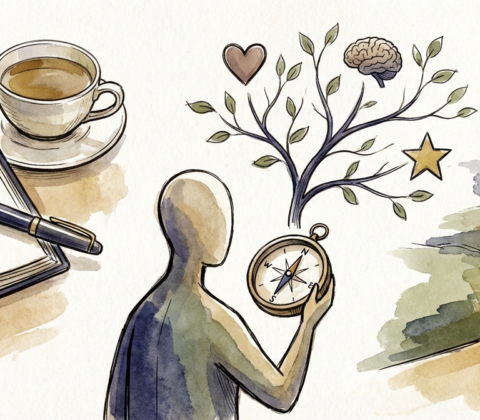
The Thing I Notice When People Start Writing About Their Lives
The Ritual of Putting Pen to Paper
There’s something happening in quiet corners of coffee shops and at kitchen tables before dawn. People are writing by hand again, not for work or school, but for themselves. I see them opening journals with the deliberate care of someone beginning a sacred practice. Their movements are different from the rapid-fire typing we’re used to. Slower. More intentional.
The research tells us why this ritual feels so necessary. Studies show that journaling reduces cortisol levels in our bloodstream while improving our working memory. Our brains literally function better when we process our thoughts on paper. But there’s something beyond the brain chemistry at work here, something that speaks to a deeper hunger for meaning-making when everything feels scattered.
What strikes me most is how this ancient practice has created an entirely modern economy. The bullet journaling movement alone has generated a $200 million market in specialized planners, dot-grid notebooks, and color-coded pens. People are spending real money on the tools of introspection, treating their inner lives with the same care they might give to a hobby or fitness routine.

Making Self-Discovery Accessible to Everyone
Social media has become an unexpected catalyst for deeper personal work. On TikTok, therapy-adjacent journaling prompts rack up millions of views, with creators offering questions like “What would you tell your younger self?” and “Write about a time you surprised yourself.” These bite-sized invitations to reflection are reaching people who might never pick up a self-help book or seek traditional therapy.
Gratitude journaling deserves special attention here. Among all the positive psychology interventions studied in randomized controlled trials, gratitude journaling shows the strongest evidence for lasting impact on wellbeing. People who consistently write down what they’re grateful for don’t just feel better in the moment. They rewire their neural pathways to notice good things more readily.
Yet the real power isn’t in any single technique but in the practice of witnessing your own experience. When we write about our lives, we become both participant and observer, living the story while making sense of it. This dual perspective creates cognitive flexibility that serves us well beyond our journal pages.
Taking Back Control of Our Stories
Something interesting is shifting in how people think about their digital presence. While social media platforms optimize for engagement and reaction, a growing number of people are returning to longer-form personal writing. They’re starting blogs again, crafting essays on Substack and Ghost, treating their own experiences as worthy of sustained attention.
This personal blog renaissance isn’t just nostalgia for the early internet. It’s people deliberately taking back narrative control from algorithms designed to fragment our attention. When someone commits to writing regularly about their life, they’re saying their thoughts deserve more than 280 characters, that their experiences merit exploration rather than just documentation.
The success of thoughtful online voices like The Marginalian long-form writing proves that audiences crave depth. Readers are hungry for authentic reflection, for the kind of meaning-making that can only happen when someone takes time to really think about what they’ve lived through.
Building a Framework for Insight
Good journaling isn’t just emotional dumping onto pages. It requires structure, the kind of framework that transforms random thoughts into genuine insight. Some people find this through bullet journaling’s systematic approach. Others prefer stream-of-consciousness morning pages. Many discover their rhythm through habit-building principles like those outlined by James Clear habit building, treating reflection as a skill that improves with consistent practice.
The most transformative journaling happens when we move beyond simply recording events to examining patterns. Why do certain situations trigger anxiety? What themes keep appearing in our relationships? How do our values show up in our daily choices? These questions require the kind of sustained attention that our distraction-heavy culture rarely rewards but desperately needs.
The process becomes its own teacher. Regular writers learn to notice the difference between writing that merely rehearses grievances and writing that generates genuine understanding. They develop an internal editor that can distinguish between wallowing and processing, between repetitive loops and productive spirals toward clarity.
The Courage to Be Seen by Ourselves
Maybe the most striking thing about committed journalers is their willingness to encounter themselves honestly. They write about their contradictions without trying to resolve them immediately. They record their failures alongside their victories. They treat their inner lives as worthy of the same curiosity they might bring to understanding a close friend.
This practice builds a particular kind of bravery. When we regularly witness our own thoughts and feelings without judgment, we become less afraid of our complexity. We develop tolerance for uncertainty and comfort with the ongoing nature of personal growth. We stop expecting ourselves to be finished products and start appreciating ourselves as works in progress.
The effects extend far beyond personal insight. People who understand themselves clearly tend to communicate more effectively, set better boundaries, and make decisions aligned with their values. They become more interesting to be around because they’ve done the work of becoming interesting to themselves.
What patterns are you noticing in your own life right now? What would happen if you gave yourself permission to explore them on paper, without needing to solve anything or arrive at tidy conclusions? Sometimes the most valuable insights come not from having answers but from learning to ask better questions.


The Quiet Revolution: Why We’re All Rethinking Productivity
The Great Productivity Pendulum
Something shifted in our collective relationship with work around 2022, and we’re still processing what it means. The term “quiet quitting” entered our vocabulary that year, describing workers who fulfill their job requirements without the performative extras that hustle culture demanded. Four years later, this concept continues to influence workplace conversations, suggesting we touched something deeper than a trend.
I’ve been tracking my own productivity experiments in what I call my process notebook, and the patterns tell a story. The data points aren’t just personal metrics. They’re breadcrumbs leading away from the optimization trap that consumed so many of us during the peak hustle years. We’re witnessing a fundamental shift in what productive work actually looks like.
The pendulum swung hard toward maximum efficiency for over a decade. Now it’s swinging back, but not toward laziness or complacency. Instead, we’re discovering something more complex: sustainable productivity that doesn’t require sacrificing our humanity for output.
Evidence from the Four-Day Week Frontier
The most compelling data comes from companies brave enough to question the foundational assumption of the five-day work week. More than sixty organizations have now completed formal four-day week trials, and the results challenge everything we thought we knew about the relationship between time and productivity. Most studies show either neutral or positive productivity outcomes when workers get an extra day off.
These aren’t Silicon Valley startups with unlimited venture capital. We’re talking about manufacturing companies, healthcare organizations, and traditional service businesses. They’re discovering that well-rested humans often accomplish more in four focused days than exhausted ones do in five scattered ones.
My own informal four-day experiments yielded surprising insights. The anticipation of a three-day weekend created urgency that eliminated much of the casual time-wasting that typically fills a normal work week. Meetings became shorter and more focused. The constant background anxiety about work-life balance went away, creating mental space for deeper thinking.
But here’s what the studies don’t capture: the qualitative shift in how work feels when you know it has clear boundaries. The psychological difference between working four intense days versus five mediocre ones extends far beyond simple productivity metrics.
The Anti-Meeting Revolution
Companies like Basecamp and its Signal v. Noise philosophy have been quietly modeling a different approach to workplace collaboration for years. Their anti-meeting stance isn’t about avoiding communication. It’s about recognizing that most meetings are productivity theater, performed for an audience that doesn’t actually exist.
This philosophy has gained traction as remote work exposed the absurdity of many traditional meeting patterns. When you can’t rely on physical presence to simulate engagement, the content quality of collaborative sessions becomes impossible to ignore. Bad meetings become obviously bad in ways that conference rooms somehow obscured.
I started tracking every meeting request in my process notebook, categorizing them by necessity and outcome. The results were sobering. Roughly sixty percent could have been handled through asynchronous communication. Another twenty percent existed primarily to make someone feel included or important. Only the remaining fraction had genuine collaborative purposes.
The companies embracing asynchronous-first communication aren’t just reducing meetings. They’re creating space for the kind of deep work that produces meaningful results. They’re acknowledging that constant collaboration isn’t always creative collaboration.
Tools for Thinking, Not Just Doing
Personal knowledge management tools have exploded in popularity, with platforms like Obsidian and Notion reaching millions of users. But this isn’t just about digital organization. These tools represent a shift from productivity systems focused on task completion toward systems designed for thinking and learning.
The rise of these platforms coincides with growing interest in building what some call a “second brain.” Users aren’t just tracking what they need to do. They’re creating external support for complex thought processes. The most interesting implementations I’ve encountered treat these tools as thinking partners rather than sophisticated to-do lists.
Cal Newport productivity writing has explored this distinction between shallow and deep work extensively. The tools gaining traction support the deep work end of the spectrum. They’re designed for people who recognize that their most valuable professional contribution isn’t completing more tasks but thinking better thoughts.
My own relationship with these tools has evolved through several phases. Initially, I treated them as sophisticated filing systems. Now they function more like external thinking environments where ideas can develop over time without the pressure of immediate application.
The Counter-Culture of Intentional Limitation
Parallel to workplace productivity changes, we’re seeing growth in movements around dopamine detoxes and digital minimalism. These aren’t Luddite rejections of technology but conscious experiments with attention and stimulation. People are discovering that constant input makes focused output nearly impossible.
The World Health Organization’s 2019 recognition of burnout as an occupational phenomenon provided official acknowledgment of what many workers already knew: the optimization approach to human performance has serious limitations. Burnout isn’t a personal failure. It’s a predictable result of treating humans like machines.
Digital minimalism represents one response to this recognition. Practitioners aren’t necessarily using less technology, but they’re using it more intentionally. They’re creating artificial scarcity in information-rich environments, recognizing that abundance can be as paralyzing as scarcity.
The most compelling approaches I’ve encountered combine structured limitation with deliberate engagement. Rather than completely disconnecting, people are experimenting with rhythms that alternate between focused consumption and complete disengagement. The goal isn’t to optimize for maximum input but to create conditions for meaningful processing.
These experiments share a common thread with Paul Graham essays about the importance of protecting thinking time from the fragmentation of modern work environments. The counter-culture movements aren’t anti-productivity. They’re pro-human-scale productivity.
What We’re Still Figuring Out
This productivity evolution is far from complete, and that’s probably appropriate. The questions we’re wrestling with don’t have simple answers. How do we maintain professional standards while rejecting performative busyness? How do we collaborate effectively while protecting individual thinking time? How do we measure meaningful contribution in a world obsessed with measurable output?
My process notebook continues to fill with experiments, observations, and questions that lead to more questions. The anti-hustle movement isn’t providing a new set of rules to follow. Instead, it’s creating permission to question rules we never consciously agreed to follow in the first place.
What patterns are you noticing in your own relationship with productivity and work? The most valuable insights often emerge from comparing notes rather than following prescribed solutions. If you’re experimenting with any of these approaches, I’d love to hear how they’re working in your particular context.
The Productivity Paradox: Why We’re All Still Figuring This Out
The Great Productivity Reckoning
Something shifted in the last few years, and I’m still trying to make sense of it. The concept of “quiet quitting” emerged in 2022 and somehow managed to stay relevant through 2026, which tells us something important about how fundamentally we’re rethinking work. It wasn’t just a social media trend that burned bright and faded. It became a lens through which people examined their relationship with productivity itself.
I’ve been keeping notes on this shift in my own process diary, watching how my own approach to getting things done has changed. The hustle culture that dominated the 2010s promised that if we just optimized harder, slept less, and pushed through more barriers, we’d achieve some mythical state of peak performance. But here’s what I’ve noticed in my own experiments with productivity systems: the harder I pushed against my natural rhythms, the less any gains stuck around.
The World Health Organization recognized burnout as an occupational phenomenon back in 2019, giving scientific weight to what many of us were feeling in our bodies. We weren’t just tired. We weren’t just stressed. We were experiencing something more fundamental, a breakdown in the machinery of perpetual optimization.
The Four-Day Week Reality Check
While we were all debating the merits of hustle culture, something interesting was happening in workplaces around the world. More than sixty companies began testing four-day work weeks, and the results have been consistently surprising. Productivity either stayed the same or improved in most trials. Not some of them. Most of them.
This throws a wrench into everything we’ve been told about the relationship between time and output. If working fewer hours can produce the same results, what does that say about how we’ve been measuring productivity? I’ve been tracking my own output across different work schedules, and the pattern holds true on a personal level too. My most productive days rarely match up with my longest days.
Companies like Basecamp have taken this logic further, building what they call an anti-meeting culture. They’ve stripped away many of the conventional productivity rituals that eat up time without clearly adding value. When I first read about their approach, I thought it sounded too extreme. Now, after experimenting with similar principles in my own work, I’m questioning why we accepted so many interruptions as necessary in the first place.
The Tools Explosion and Its Discontents
At the same time we’re questioning traditional productivity culture, we’re also seeing an explosion in personal knowledge management tools. Obsidian, Notion, and dozens of similar platforms now serve millions of users who are trying to build better systems for thinking and creating. I’ve tried most of these tools, and here’s what I’ve learned: the tool itself rarely solves the underlying problem.
What these tools do provide is a framework for thinking more deliberately about how we process information and make connections between ideas. The Cal Newport productivity writing that influenced many of these platforms emphasizes deep work over reactive busyness. But implementing these principles requires more than downloading an app. It requires fundamental changes in how we structure our days and protect our attention.
The irony is that many people, myself included, have spent more time organizing their productivity systems than actually using them. We build elaborate note-taking hierarchies and task management workflows that turn into projects themselves. The process of optimization becomes a sophisticated form of procrastination.
The Minimalism Countermovement
Perhaps as a reaction to this tools explosion, we’re also seeing growing interest in dopamine detoxes and digital minimalism movements. People are experimenting with reducing stimulation, limiting social media, and creating more space for boredom. The underlying hypothesis is that our constant connectivity has messed with our ability to focus deeply on anything.
I’ve experimented with various forms of digital detox, from week-long social media breaks to phone-free mornings. The results have been mixed but illuminating. The withdrawal symptoms are real, which suggests these platforms have indeed altered our baseline attention patterns. But the benefits of reduced stimulation don’t appear immediately. They emerge slowly, in the form of longer attention spans and greater comfort with unstimulating activities.
This connects to broader questions about what productivity actually means. If we define it as getting more things done faster, then digital minimalism might seem counterproductive. But if we define it as doing meaningful work with greater focus and less stress, then reducing digital noise starts to make sense. The Paul Graham essays on maker schedules versus manager schedules capture this distinction well. Different types of work require different types of attention.
What I’m Learning in Real Time
Here’s where I admit that I don’t have this figured out. I’m writing this article partly to work through my own contradictions. I use sophisticated note-taking software while also practicing digital minimalism. I advocate for sustainable work practices while still feeling the pull of optimization culture. I believe in the four-day work week while sometimes working six-day weeks because I genuinely enjoy certain projects.
What I’m discovering through this process diary approach is that productivity isn’t a problem to be solved once and for all. It’s an ongoing negotiation between our intentions, our circumstances, and our energy levels. The anti-hustle backlash isn’t just about rejecting productivity culture entirely. It’s about developing a more realistic understanding of what sustainable performance actually looks like.
The most useful insight I’ve gathered so far is this: productivity systems work best when they align with our natural rhythms rather than fighting against them. This sounds obvious, but it’s surprisingly difficult to implement because it requires paying attention to patterns that develop over weeks and months, not days. It also requires accepting that optimal productivity might look different for each person and might change over time.
I’d love to hear how you’re navigating this tension between optimization and sustainability in your own work. What experiments are you running? What assumptions are you questioning? Let’s figure this out together.
Journaling, self-reflection and meaning-making: Belief update and intellectual honesty
This is one of those moments where paying attention changes what you do next. The topic of journaling, self-reflection and meaning-making deserves more careful attention than the typical coverage provides, and the reason is not complicated once you know where to look.
The part of this that most people miss is also the part that matters most: bullet journaling spawned a $200 million market in stationery and planners. The honest read of the situation is also the more accurate one once you examine what the evidence actually shows.
The Honesty: Setting the Terms
Studies showing journaling reduces cortisol and improves working memory aren’t just data points in the story of journaling, self-reflection and meaning-making. They’re the structural condition that makes everything else in this analysis make sense. Context like this doesn’t age quickly. The conditions that produced it have been building for years, and the convergence is what makes the current moment different from previous moments that looked similar from a distance.
Bullet journaling spawned a $200 million market in stationery and planners. Therapy-adjacent journaling prompts generate millions of views on TikTok. When you look at both together, a pattern emerges that The Marginalian long-form writing has been covering from the inside: the conditions are more durable than they first appear, and the implications extend further than the immediate headline suggests.
To understand why this matters, it helps to look at what was true three years ago versus what is true now. The difference isn’t simply quantitative, it’s qualitative. The participants, the infrastructure, and the incentive structures have all shifted in ways that compound rather than cancel out. That compounding is the most important element to track.
What makes this moment worth examining carefully isn’t the novelty but the confirmation. The underlying dynamics have been visible for some time. What’s new is that they’ve reached a threshold where ignoring them requires active effort rather than simple inattention. That threshold crossing is the event, not the underlying movement that produced it.
And gratitude journaling has the strongest RCT evidence of all positive psychology interventions. This is part of that same picture. These elements don’t exist in separate silos, they’re reinforcing conditions in the same structural shift.
The Changed Mind: The Analysis
Gratitude journaling’s RCT evidence being strongest of all positive psychology interventions is where the analysis gets more specific. The surface reading is accessible and not wrong, but it misses the mechanism, and the mechanism is where the practical insight lives. The part most people miss: the mechanism is a personal blog renaissance as people reclaim narrative from social media, and understanding it changes what you do with the information.
Consider what a personal blog renaissance growing as people reclaim narrative from social media represents in context. It’s not a correlation that happened to appear, it’s a downstream consequence of structural factors that have been compounding. Previous readings of similar situations failed because they treated the symptom as the cause. The structural account is less satisfying as a headline but more useful as an analytical tool.
The comparison to prior cycles is instructive precisely because of where it breaks down. Superficially similar conditions resolved differently in previous iterations because the substrate was different. What long-form personal essays finding audiences on Substack and Ghost represents is a substrate change, the kind that alters the elasticity of the system rather than just its current value. Recognizing that distinction is what separates analysis from pattern-matching.
The skeptical counterargument deserves honest engagement: prior moments with similar surface characteristics didn’t produce the outcomes that seemed logical at the time. That history is real. What’s different now is long-form personal essays finding audiences on Substack and Ghost, which isn’t a minor variable, it’s the infrastructure condition that previous cycles lacked. Infrastructure changes tend to be persistent in ways that sentiment-driven changes are not. James Clear habit building is one source tracking this dimension with the rigor it requires.
There’s also a distributional question that often goes unaddressed in coverage of journaling, self-reflection and meaning-making: who captures the value created by these shifts, and who absorbs the disruption costs? The aggregate picture can be positive while the distribution is uneven in ways that matter enormously to specific participants. Keeping that distributional lens in view is part of reading the situation clearly rather than simply optimistically.
Implications: What This Means If You Care About Changed beliefs about work
The implications of journaling, self-reflection and meaning-making extend beyond the immediate context. Studies showing journaling reduces cortisol and improves working memory combined with the structural conditions described above creates a situation where adjacent fields, decisions, and communities are affected in ways that aren’t always visible from inside the primary story. The second-order effects are frequently more important than the first-order ones, and they’re where careful attention pays the highest returns.
The frame that matters here, and this is where this perspective departs from the mainstream coverage, is that therapy-adjacent journaling prompts generating millions of views on TikTok is a leading indicator rather than a lagging one. The people positioned to respond to what this signals, rather than to what it confirms, are the ones who will be less surprised by what follows.
The practical response depends heavily on your position relative to the dynamics at play. For those closest to the core of journaling, self-reflection and meaning-making, the implications are immediate and operational. For those at greater distance, the implications are strategic, a matter of understanding which adjacent pressures are building and which assumed stabilities are more fragile than they appear.
The practical question isn’t whether to engage with these dynamics but how. The answer depends on context, on what role you occupy relative to journaling, self-reflection and meaning-making and what your actual decision horizon is. But the first step is the same regardless: accurate understanding of what’s actually happening rather than what the most available narrative says is happening.
A few concrete observations are worth separating out from the broader analysis. First: bullet journaling spawning a $200 million market in stationery and planners isn’t a temporary condition, it’s a new baseline. Second: the personal blog renaissance growing as people reclaim narrative from social media suggests that the adjustment period isn’t over. Third, and most important: the organizations and individuals who are treating the current moment as a new steady state rather than a transition are making a categorization error that will be costly to unwind later.
The Case Against: What the Critics Get Right
Intellectual honesty requires acknowledging the strongest counterarguments, not just the weakest ones. The case against the optimistic reading of journaling, self-reflection and meaning-making isn’t trivial. There are structural vulnerabilities in the current picture that deserve direct engagement rather than dismissal.
The most serious objection is the one about sustainability. Therapy-adjacent journaling prompts generating millions of views on TikTok can be read not as a foundation but as a ceiling, a point beyond which growth becomes self-limiting because of the very dynamics that produced it. If the current state has already incorporated most of the available supply of early-adopting participants, the remaining growth curve may be structurally shallower than the recent trajectory implies.
There’s also the policy and regulatory dimension. Studies showing journaling reduces cortisol and improves working memory describe a condition in a relatively permissive environment. Regulatory responses to the scale implied by these numbers aren’t inevitable, but they’re not implausible either. The organizations that are planning as though the current regulatory environment is permanent are making an assumption that the history of fast-growing sectors doesn’t support.
The rebuttal to these concerns isn’t that they’re wrong, it’s that they’re already partially priced into the current state of the field. Long-form personal essays finding audiences on Substack and Ghost reflects an environment where participants are already adapting to constraints rather than operating in an unconstrained space. The adjustment capacity of the ecosystem is higher than a purely top-down view of the risks suggests.
Looking Forward
The trajectory here is clearer than the pace. Making predictions about when specific thresholds will be crossed is genuinely difficult, and anyone claiming precision about timelines should be treated with skepticism. But the direction, toward continued journaling studies showing reduced cortisol and improved working memory and continued development of the conditions described above, is supported by the evidence in a way that isn’t contingent on a single variable going right.
Long-form personal essays finding audiences on Substack and Ghost is the variable to watch as the leading indicator. Historical patterns suggest it moves first, with broader metrics following with some lag. This doesn’t make the outcome certain, but it makes it legible, and legibility is the precondition for good decisions.
Three questions are worth holding as the story develops. First: are the structural conditions that enabled the current state durable, or are they cyclical? Second: who is positioned to benefit from the next phase, and does that differ materially from who benefited in the current phase? Third: what would a clean falsification of the optimistic thesis look like, and is there any evidence of that signal emerging? These questions don’t need answers today, but having asked them changes what you notice in the months ahead.
The action from here is straightforward, even when the situation isn’t. The current moment in journaling, self-reflection and meaning-making is one where the people who have built an accurate model of the underlying dynamics are better positioned than the people who are relying on the surface story. Building that model isn’t a quick task, but it is a tractable one, and this analysis is intended as one input into it.
What have you changed your mind about that you’d be willing to name publicly?
Personal productivity and the anti-hustle backlash: Belief update and intellectual honesty
This is one of those moments where paying attention changes what you do next. The topic of personal productivity and the anti-hustle backlash deserves more careful attention than the typical coverage provides, and the reason is not complicated once you know where to look.
The part that most people miss is also the part that matters most: four-day work week trials showing productivity neutral or positive in 60+ company studies. When you actually look at what the evidence shows, the intellectually honest read is pretty clear.
The Honesty: Setting the Terms
Quiet quitting was coined in 2022, and it’s still dominating workplace conversations in 2026. That’s not just a data point in this story, it’s the structural condition that makes everything else make sense. This context doesn’t age quickly. The conditions that produced it have been building for years.
Four-day work week trials showing productivity neutral or positive in 60+ company studies. Basecamp and Signal v. Noise’s anti-meeting culture gaining real traction. When you look at both together, a pattern emerges that Paul Graham essays has been covering from the inside: the conditions are more durable than they first appear.
To understand why this matters, look at what was true three years ago versus what is true now. The delta isn’t simply quantitative, it’s qualitative. The participants, the infrastructure, and the incentive structures have all shifted in ways that compound rather than cancel out. That compounding is the most important element to track.
What makes this moment worth examining carefully isn’t the novelty but the confirmation. The underlying dynamics have been visible for some time. What’s new is that they’ve reached a threshold where ignoring them requires active effort rather than simple inattention.
And personal knowledge management tools like Obsidian and Notion reaching millions is part of that same picture. These elements don’t exist in separate silos, they’re reinforcing conditions in the same structural shift.
The Changed Mind: The Analysis
Personal knowledge management tools like Obsidian and Notion reaching millions is where the analysis gets more specific. The surface reading is accessible and not wrong, but it misses the mechanism. And the mechanism is where the practical insight lives. The part that most people miss: the mechanism is dopamine detox and digital minimalism movements growing as counter-culture.
Consider what dopamine detox and digital minimalism movements growing as counter-culture represents in context. It’s not a correlation that happened to appear, it’s a downstream consequence of structural factors that have been compounding. Previous readings of similar situations failed because they treated the symptom as the cause.
The comparison to prior cycles is instructive precisely because of where it breaks down. Similar conditions resolved differently in previous iterations because the substrate was different. What burnout being recognized as an occupational phenomenon by WHO since 2019 represents is a substrate change, the kind that alters the elasticity of the system rather than just its current value.
The skeptical counterargument deserves honest engagement: prior moments with similar surface characteristics didn’t produce the outcomes that seemed logical at the time. That history is real. What’s different now is burnout being recognized as an occupational phenomenon by WHO since 2019, which isn’t a minor variable, it’s the infrastructure condition that previous cycles lacked. Infrastructure changes tend to persist in ways that sentiment-driven changes don’t. Cal Newport productivity writing is one source tracking this dimension with the rigor it requires.
There’s also a distributional question that often goes unaddressed in coverage of personal productivity and the anti-hustle backlash: who captures the value created by these shifts, and who absorbs the disruption costs? The aggregate picture can be positive while the distribution is uneven in ways that matter enormously to specific participants.
Implications: What This Means If You Care About Changed beliefs about work
The implications of personal productivity and the anti-hustle backlash extend beyond the immediate context. Quiet quitting coined in 2022 still resonating in 2026 workplace conversations combined with the structural conditions described above creates a situation where adjacent fields, decisions, and communities are affected in ways that aren’t always visible from inside the primary story. The second-order effects are frequently more important than the first-order ones.
The frame that matters here, and this is where this perspective departs from the mainstream coverage, is that Basecamp and Signal v. Noise’s anti-meeting culture gaining traction is a leading indicator rather than a lagging one. The people positioned to respond to what this signals, rather than to what it confirms, are the ones who will be less surprised by what follows.
The practical response depends heavily on your position relative to the dynamics at play. For those closest to the core of personal productivity and the anti-hustle backlash, the implications are immediate and operational. For those at greater distance, the implications are strategic, a matter of understanding which adjacent pressures are building and which assumed stabilities are more fragile than they appear.
The practical question isn’t whether to engage with these dynamics but how. The answer depends on context, on what role you occupy relative to personal productivity and the anti-hustle backlash and what your actual decision horizon is. But the first step is the same regardless: accurate understanding of what’s actually happening rather than what the most available narrative says is happening.
A few concrete observations are worth separating out from the broader analysis. First: four-day work week trials showing productivity neutral or positive in 60+ company studies isn’t a temporary condition, it’s a new baseline. Second: dopamine detox and digital minimalism movements growing as counter-culture suggests that the adjustment period isn’t over. Third, and most important: the organizations and individuals who are treating the current moment as a new steady state rather than a transition are making a categorization error that will be costly to unwind later.
The Case Against: What the Critics Get Right
Intellectual honesty requires acknowledging the strongest counterarguments, not just the weakest ones. The case against the optimistic reading of personal productivity and the anti-hustle backlash isn’t trivial. There are structural vulnerabilities in the current picture that deserve direct engagement rather than dismissal.
The most serious objection is the one about sustainability. Basecamp and Signal v. Noise’s anti-meeting culture gaining traction can be read not as a foundation but as a ceiling, a point beyond which growth becomes self-limiting because of the very dynamics that produced it. If the current state has already incorporated most of the available supply of early-adopting participants, the remaining growth curve may be structurally shallower than the recent trajectory implies.
There’s also the policy and regulatory dimension. Quiet quitting coined in 2022 still resonating in 2026 workplace conversations describes a condition in a relatively permissive environment. Regulatory responses to the scale implied by these numbers aren’t inevitable, but they aren’t implausible either. The organizations that are planning as though the current regulatory environment is permanent are making an assumption that the history of fast-growing sectors doesn’t support.
The rebuttal to these concerns isn’t that they’re wrong, it’s that they’re already partially priced into the current state of the field. Burnout being recognized as an occupational phenomenon by WHO since 2019 reflects an environment where participants are already adapting to constraints rather than operating in an unconstrained space. The adjustment capacity of the ecosystem is higher than a purely top-down view of the risks suggests.
Looking Forward
The trajectory here is clearer than the pace. Making predictions about when specific thresholds will be crossed is genuinely difficult, and anyone claiming precision about timelines should be treated with skepticism. But the direction, toward quiet quitting continuing to resonate and continued development of the conditions described above, is supported by the evidence in a way that isn’t contingent on a single variable going right.
Burnout being recognized as an occupational phenomenon by WHO since 2019 is the variable to watch as the leading indicator. Historical patterns suggest it moves first, with broader metrics following with some lag. This doesn’t make the outcome certain, but it makes it legible, and legibility is the precondition for good decisions.
Three questions are worth holding as the story develops. First: are the structural conditions that enabled the current state durable, or are they cyclical? Second: who is positioned to benefit from the next phase, and does that differ materially from who benefited in the current phase? Third: what would a clean falsification of the optimistic thesis look like, and is there any evidence of that signal emerging? These questions don’t need answers today, but having asked them changes what you notice in the months ahead.
The action from here is straightforward, even when the situation isn’t. The current moment in personal productivity and the anti-hustle backlash is one where the people who have built an accurate model of the underlying dynamics are better positioned than the people who are relying on the surface story. Building that model isn’t a quick task, but it’s a tractable one, and this analysis is intended as one input into it.
What have you changed your mind about that you’d be willing to name publicly?


Bloggertipstricks
Bloggertipstricks
Personal essays, notes, and ideas worth sharing.
This is my corner of the internet. I write about whatever catches my attention: books that stuck with me, projects I’m working on, half-formed ideas, and yes, sometimes my actual life. There’s no grand plan here. No content calendar or publishing schedule. Just whatever feels worth putting into words at the moment.
What you’ll find here: Essays · Project updates · Reading notes · Random thoughts · Personal stuff


The Robopocalypse Never Came: Embracing the Age of Collaborative Robotics
Hey there, fellow tech enthusiasts! Today, we’re diving into one of the most exciting, and honestly, kinda adorable, advancements in technology—collaborative robotics, or as we insiders like to call them, cobots. Unlike their intimidating cousins from science fiction, these little guys are here to be your buddy, your partner in crime, your… okay, maybe not crime, but you get the picture.
What Are Cobots, Anyway?
Let’s start with a quick primer. Cobots are nothing like the lumbering metal giants you might imagine when thinking of “robots.” Built to work safely alongside humans in a shared workspace, these machines are the best team players you’ll ever meet. They bring precision and stamina where human arms might tire and mess up, but they have zero Skynet-like ambitions.
Cobots aren’t out to steal jobs. They’re here to help us work smarter, not harder. Picture a tiny robot hand passing you a wrench while you tinker with a car engine or a robotic arm that lifts heavy boxes so your back doesn’t scream at you later. This isn’t some far-off future scenario. It’s happening right now.
The Real-World Marvels of Cobot Deployment
Boosting Productivity
Let’s talk productivity. Have you ever felt that mid-afternoon slump when the coffee wears off, and the to-do list just seems to grow? Well, cobots don’t need coffee breaks, and they won’t corner you with endless small talk about last night’s game. Call me antisocial, but there’s something really appealing about working with someone (or something) that’s laser-focused.
Manufacturing floors around the world already use cobots to streamline operations. By taking over repetitive tasks, these clever devices let humans focus on what we do best: creative problem-solving and strategic thinking. I heard about a small factory in Denmark where cobots cut production time by half, simply because they never get tired. Something my old college self could’ve really used during finals, if you know what I mean.
Creating Safer Work Environments
Now, I know what you’re thinking. Aren’t machines prone to glitches? I get it. It’s easy to picture rogue robots going haywire. But cobots are carefully designed with safety features that often beat human reflexes. They have sensors and AI to detect and gently halt if an unsuspecting human wanders into their work zone. It’s like walking into an invisible airbag, or maybe more like doing the robot dance and hitting pause before stepping on your dance partner’s shoes.
Democratizing Automation
Here’s the kicker: cobots are making automation accessible to businesses that never dreamed they could afford cutting-edge tech. They cost way less than their industrial robot cousins, making them perfect for startups and small-to-medium businesses. It’s kind of like having a personal assistant but without the executive salary. More budget-friendly and less likely to ask for time off to backpack through Europe.
The Challenges: Setting Our Expectations
But hey, it’s not all sunshine and rainbows in cobot-land. Like any technology, there are hurdles. One of the biggest is getting cobots to fit smoothly into existing workflows. It’s like getting a new puppy—super exciting, but you need to figure out how they fit into your daily routine without chewing up your slippers.
Plus, there’s the need for ongoing training and adaptation. Humans need to get comfortable with robotic co-workers, and cobots need constant software updates. Imagine your office IT guy, but for robots and with probably less need to remind them to “Have you tried turning it off and on again?”
Cobots on the Horizon: A Look at What’s Next
Looking ahead, the potential for cobots seems as limitless as human imagination itself. Picture machines that not only handle physical tasks but also boost creative and intellectual work. We’re talking about cobots helping writers brainstorm or guiding surgeons in delicate procedures, amplifying their skills rather than replacing them.
Companies like Universal Robots and Rethink Robotics are leading research in making cobots more intuitive and flexible. It’s an exciting field that blends AI, machine learning, sensor technology, and a dash of science fiction, just without the dystopia.
Conclusion: Is the Future of Work… Friendly?
To wrap it all up, collaborative robotics represent a tech dream that doesn’t come with the anxiety of being replaced but promises a future where technology complements human abilities. Picture a world where labor isn’t back-breaking but rather a collaborative effort with our mechanical friends.
So, where does this leave us? The age of co-working with robots isn’t a tale to watch unfold. It’s a story we’re actively writing right now. Whether you’re an engineer, artist, or entrepreneur, the cobot revolution invites us all to rethink what’s possible when human creativity partners with tireless technology.
Until next time, keep daydreaming about the future and maybe consider how a cobot sidekick could change your routine for the better. Who knew that in the world of innovation, companionship would come with a plastic and metal smile? Cheers!