Monthly Archives: March 2026
Why I’m Rethinking Everything After Reading About Japan’s 4-Day Work Week Results
The Moment My Productivity Worldview Cracked Wide Open
I’ve always been that person who wears exhaustion like a badge of honor. You know the type—scheduling calls at 6 AM, answering emails at midnight, convinced that more hours automatically equals more progress. Last week, I stumbled across some research from Japan’s nationwide four-day work week trial that made me question everything I thought I knew about getting things done. The numbers weren’t just good, they were embarrassingly better than what I’ve been achieving with my five-day grind.
The data hit me like a cold splash of reality. When Japan wrapped up their comprehensive trial in December 2025, they found that companies actually saw productivity jump by 23 percent while stress-related sick days plummeted by 41 percent. Twenty-three percent. Not the marginal gains I’ve been scraping for by optimizing my morning routine or trying new project management apps, but a fundamental leap forward that happened when people worked less, not more.
I sat there staring at my laptop screen, coffee growing cold, realizing I’d been operating from a completely flawed premise. The Japan 4-day work week study results weren’t just challenging my schedule. They were challenging my entire relationship with work itself.
Wrestling With My Own Resistance (And Why Change Feels So Hard)
My first instinct was to find reasons why this wouldn’t work for me. My industry is different. My clients expect round-the-clock availability. I’m building something important that requires sacrifice. The mental gymnastics were impressive, even by my own standards of self-deception.
But then I started looking at the broader picture, and the evidence kept piling up in ways I couldn’t ignore. Microsoft Japan’s pilot program from 2019 had grown into something much bigger. They’d expanded to 500 companies by 2025, with 89 percent reporting better employee retention. Companies using platforms like Monday.com were seeing 350 percent more job applications when they offered four-day schedules. This wasn’t just a feel-good experiment anymore. It was becoming a competitive advantage.
The resistance I felt wasn’t really about logistics. It was about admitting I’d been wrong about something fundamental. There’s something deeply uncomfortable about realizing you’ve been swimming upstream unnecessarily for years, especially when you’ve built your identity around being someone who works harder than everyone else.
What Workers Actually Do With That Extra Day (Spoiler: It’s Not Netflix)
One of my biggest concerns was that an extra day off would just mean an extra day of mindless scrolling or binge-watching. The Japan Institute for Labour Policy put that worry to rest pretty quickly. When they tracked how workers used their additional day, 67 percent spent it on family time and 45 percent focused on personal health activities.
Think about that for a moment. Given a whole extra day, most people chose to invest in relationships and well-being. Not shopping, not entertainment, but the foundational stuff that makes everything else sustainable. The same stuff I’ve been telling myself I’ll focus on “once this project is finished” or “after this busy season ends.”
I started thinking about my own week and realized how little intentional time I actually spend on either of those categories. Family time happens in the gaps between work obligations. Health activities get squeezed into whatever energy remains after I’ve given my best hours to my computer screen. Maybe the problem isn’t that there aren’t enough hours in the day. Maybe the problem is how I’ve been allocating the hours I already have.
When Governments Start Paying Attention, Maybe We Should Too
The momentum behind this shift caught me off guard. Belgium didn’t just run a pilot program. They became the first EU country to legally guarantee four-day work weeks in January 2026. When I read about their Belgium 4-day work week legislation, I realized this wasn’t just a trendy workplace perk anymore. Other nations are drafting similar laws.
There’s something powerful about watching entire countries bet their economic competitiveness on the idea that working less might actually produce better results. These aren’t startup CEOs making bold statements at conferences. These are governments looking at hard data and deciding to restructure their entire labor frameworks around it.
I had to ask myself: if whole nations are willing to experiment with this approach, what exactly am I afraid of? The worst-case scenario is that I discover I can maintain my current output in four days instead of five. The best-case scenario is that I join the ranks of people seeing 23 percent productivity increases while actually having time for the things that matter.
My Messy First Attempts (Because Transparency Matters)
I’m not going to pretend I’ve figured this out yet. My first week trying a modified schedule was a disaster. I crammed five days of meetings into four and felt more exhausted than ever. The second week was better, but I still found myself checking email on my “off” day because old habits die hard.
What I’m learning is that a four-day work week isn’t just about subtracting a day. It’s about fundamentally rethinking how work gets done. The Japanese companies that saw those impressive results didn’t just work fewer hours. They restructured meetings, streamlined processes, and eliminated busy work that had been masquerading as productivity.
I’m three weeks into this experiment now, and I’m starting to see glimpses of what might be possible. Thursday became my planning day instead of my panic day. I’m saying no to meetings that don’t have clear outcomes. I’m batching similar tasks instead of context-switching all day long. The productivity gains are real, even if they’re still inconsistent.
More importantly, I’m remembering what it feels like to have energy left over at the end of the week. To make dinner plans without calculating whether I’ll be too tired to be good company. To start a book without falling asleep on page three. These aren’t small things. They’re the building blocks of a life that extends beyond work accomplishments.
I’m curious about your own relationship with work hours and productivity. Have you experimented with alternative schedules? What’s holding you back from trying something different? Drop me a line. I’m collecting stories from people who are questioning the traditional work week, whether you’re succeeding wildly or failing spectacularly. Both perspectives help the rest of us figure out what might actually work.
What Nobody Tells You About the Thursday Before Deadline
The 3 AM Panic Text
Last week my friend Maya sent me a text at 3:17 AM: “Is it normal to hate everything you’ve made when you’re this close to finishing?” She was three days away from launching her ceramics collection, had spent eight months perfecting each piece, and was convinced it was all garbage. I screenshot the message because it perfectly captured something we never talk about in creative work. The closer you get to sharing your work with the world, the more convinced you become that it’s terrible.
This isn’t impostor syndrome or perfectionism talking. It’s what happens when you stare at the same project for months. You’ve lost all perspective. Every choice feels wrong because you’ve second-guessed each one fifty times. Maya’s ceramics were beautiful, but she couldn’t see it anymore. She was too deep in the process to remember why she started or what made the work special in the first place.
The Graveyard of Almost-Great Ideas
My laptop has a folder called “Abandoned Projects” with 47 items in it. There’s the short story collection I spent six months outlining but never wrote. The podcast series about failed businesses that I recorded three episodes for before realizing I hated interviewing people over Zoom. The newsletter about productivity systems that died after issue twelve when I admitted I don’t actually follow any productivity systems consistently.
Here’s what I learned from cataloging my failures: most of them weren’t actually failures. They were experiments that taught me what I didn’t want to do. The podcast experiment showed me I prefer written interviews. The productivity newsletter revealed that I’m more interested in talking about why systems fail than why they work. The short story collection became the foundation for the novel I’m working on now.
But when you’re in the middle of abandoning something, it feels like pure failure. Social media doesn’t show you the graveyard folders. You see the polished final products, not the pile of dead projects that led to them. Every creative person I know has a version of that folder, but we pretend it doesn’t exist.
The Myth of Steady Progress
Creative work doesn’t follow a neat line from idea to execution. It’s more like a drunk person trying to walk straight. You make progress for three weeks, then spend two weeks undoing half of what you did because you realized it was heading in the wrong direction. You have a breakthrough on Tuesday that makes everything click, then spend Wednesday staring at a blank page wondering if you imagined the whole thing.
I keep a project log now, partly because I wanted to see if this chaotic pattern was real or just my perception. Turns out it’s absolutely real. Looking at my entries for the novel, I can see the pattern clearly. “Wrote 2,000 words, finally understand the main character.” Next entry: “Deleted 1,500 words, character still feels like cardboard.” Three days later: “Breakthrough with dialogue, everything is falling into place.” A week after that: “Maybe I should scrap the whole thing and write about robots instead.”
The myth of steady progress makes us think we’re doing something wrong when we hit the inevitable valleys. But the valleys aren’t bugs in the creative process, they’re part of it. They’re where you figure out what you’re actually trying to say.
Why Deadlines Save You From Yourself
Without deadlines, creative projects expand to fill all available mental space. I learned this the hard way with a freelance project that had no firm deadline. “Just get it to me when you’re happy with it,” the client said. Six weeks later, I was still tweaking the same three paragraphs because I couldn’t decide if they captured the right tone.
Deadlines force you to make peace with imperfection. They create a line in the sand where you have to stop polishing and start sharing. This is terrifying and necessary in equal measure. The work will never feel finished, but at some point you have to choose finished over perfect.
Maya’s ceramics launch happened on schedule despite her 3 AM panic. She sold half her inventory in the first week. The pieces she thought were “obviously flawed” were the ones that sold first. Her customers saw character where she saw mistakes. This is almost always how it goes, but you can’t see it until you push the work out into the world.
The Real Reward Isn’t What You Think
The best part of finishing a creative project isn’t the praise or the sales or the sense of accomplishment. It’s the clarity that comes after. Once you’ve completed something and gotten some distance from it, you can finally see what worked and what didn’t. You understand what you were trying to do, even if you couldn’t put it into words while you were doing it.
This clarity becomes the foundation for the next project. You carry forward the techniques that worked and leave behind the ones that didn’t. You get better at recognizing the difference between a problem with the work and a problem with your perspective on the work. You learn when to push through resistance and when to pivot.
But you only get this clarity by finishing things and moving on to the next thing. The projects that live forever in draft form never teach you anything except how to second-guess yourself. The abandoned folder is useful, but only if you also have a completed folder to balance it out.
What’s sitting in your abandoned folder right now? And more importantly, what’s in your “close enough to ship” folder? Because that second folder is where the real learning happens.
My Brutally Honest Review of the WHOOP 5.0: Is Sleep Tracking Worth $30/Month?
The Promise That Hooked Me
When WHOOP announced their 5.0 model in January with a seven-day battery life and new stress monitoring capabilities, I was already three months deep into the worst sleep period of my adult life. Working late, stress eating, doom-scrolling until 2 AM—the whole catastrophic package. The idea that a little black band could somehow decode the mystery of why I felt like garbage every morning seemed worth investigating, even at thirty dollars a month.
I’d tried the Apple Watch sleep tracking, which felt like asking a Ferrari to monitor my grocery shopping habits. I’d downloaded apps that promised to revolutionize my rest with nothing more than my phone’s microphone. But WHOOP felt different—serious, clinical, like it might actually tell me something I didn’t want to hear about my habits. Sometimes that’s exactly what you need.
The subscription model felt steep compared to buying a Fitbit outright, but I rationalized it as cheaper than therapy. If this thing could help me figure out why my energy levels resembled those of a depressed sloth, maybe it was worth more than the cost of my monthly coffee habit. Spoiler alert: the math on both fronts got complicated.
Living With the Data Deluge
The first month with WHOOP felt like drinking from a fire hose made of charts and percentages. Recovery scores, strain goals, sleep debt calculations—every morning brought a new report card on my existence. The device itself disappeared on my wrist after a few days, which I appreciated. No buzzing notifications or glowing screens demanding attention, just quiet data collection happening in the background.
What caught me off guard was how accurate some of the readings felt. When the Wareable WHOOP 5.0 accuracy testing showed heart rate measurements within three percent of chest strap monitors during exercise, I wasn’t surprised. During workouts, the thing seemed to know my heart rate better than I did. Sleep tracking proved trickier than any marketing material suggested.
The stress monitoring feature launched with bold promises, but in practice it felt like having an anxious friend constantly checking on you. “Your heart rate variability suggests elevated stress,” the app would inform me, usually right after I’d already figured out I was stressed about a work deadline or family situation. The insights weren’t wrong, but they weren’t particularly revelatory either.
The Sleep Tracking Reality Check
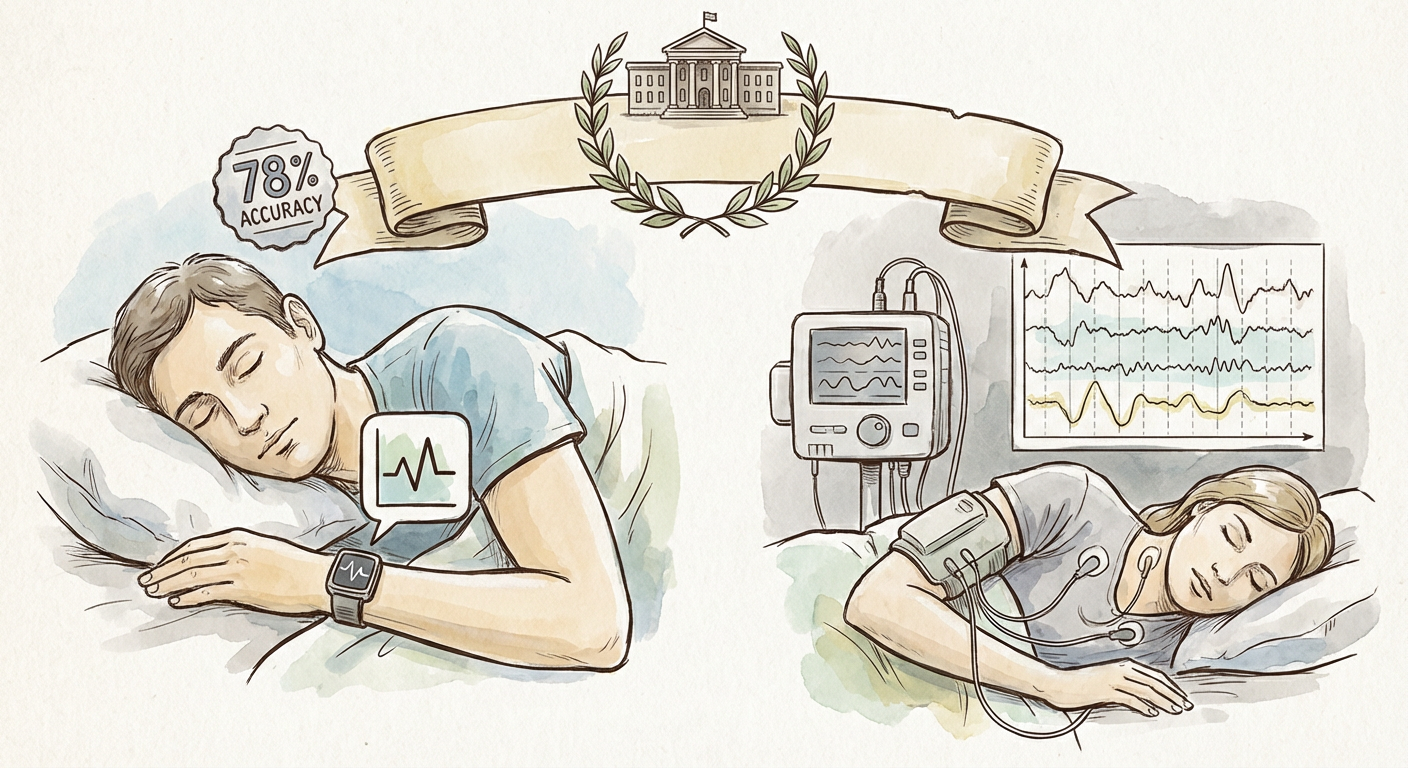
After six months of wearing this thing religiously, I started questioning whether the sleep data was helping or just creating new anxiety. The Harvard sleep tracker accuracy study from December found that consumer sleep trackers average about 78% accuracy compared to clinical sleep studies. That means roughly one in five nights, the data I was obsessing over might be wrong.
I noticed patterns in my own experience that made me wonder about that 22% error rate. Some nights when I felt terrible, WHOOP insisted I’d gotten great sleep. Other mornings when I woke up refreshed, it scolded me about poor recovery. The disconnect was frustrating enough that I started keeping a simple journal of how I actually felt, separate from what the app told me I should feel.
The sleep coaching recommendations often felt generic—avoid screens before bed, keep your room cool, maintain consistent bedtime. Sound advice, certainly, but nothing I couldn’t have found in any sleep hygiene article online. For thirty dollars a month, I expected more personalized insights based on my specific patterns and responses.
The Subscription Trap and Community Questions
By month eight, the subscription cost started feeling heavier than the device on my wrist. At $360 annually, WHOOP costs more than many people spend on gym memberships. The company reports 1.2 million active subscribers with an 89% renewal rate, which suggests most people find value I was struggling to quantify. But that also meant I was part of a pretty expensive club that might just be really good at convincing itself the membership was worthwhile.
The social features felt forced—seeing friends’ strain scores and recovery percentages didn’t motivate me the way leaderboards do in fitness apps. If anything, it created weird pressure to justify low recovery days or explain why I didn’t hit my strain targets. Sleep isn’t competitive. Treating it like a sport seemed to miss the point entirely.
What bothered me most was the device dependence. Miss a few days of wearing it, and the app acts like you’ve disappeared entirely. There’s no graceful degradation, no way to manually input how you felt or what you did. For a tool supposedly designed to improve your relationship with your body’s signals, it demanded pretty rigid adherence to its own measurement methods.
The Messy Truth About Behavior Change
Here’s what actually changed during my year with WHOOP: I became more aware of my sleep schedule, but mostly because I was checking the app every morning, not because I fundamentally understood my patterns better. I started going to bed earlier, but that had more to do with seeing my recovery scores tank after late nights than any deep insight into my circadian rhythms. The device captured my behavior changes, but I’m not convinced it caused them.
The most valuable realization came around month ten, when I stopped wearing the device for two weeks during a vacation. Without the constant stream of metrics, I started paying attention to how I actually felt again. Tired meant tired, regardless of heart rate variability. Energized meant energized, whether or not my sleep architecture looked optimal on a graph.
That doesn’t mean the WHOOP data was useless—it provided external validation for patterns I was already starting to notice. But at some point, you have to trust your own experience over the algorithm’s interpretation of your experience. The device excels at measurement, but wisdom about your own body has to come from somewhere deeper than a smartphone app.
If you’re considering WHOOP, ask yourself whether you need better data about your sleep or better habits around your sleep. For some people, especially athletes tracking training loads, the detailed metrics might justify the cost. For others, a $30 book about sleep hygiene might work better than a $360 annual subscription. What questions are you hoping the data will answer? Do you really need a computer to answer them?
Why I Started Timing My Goal Reviews (And What Happened When I Did)
The Thing I Noticed About My December Panic
Every December, I used to have the same ritual. I’d sit down with my coffee, open up whatever goal-setting system I was using that year, and feel this creeping dread as I scrolled through my ambitious January declarations. “Launch the newsletter by March.” Still sitting in drafts. “Complete the certification course.” Three modules deep, bookmark buried somewhere in my browser chaos. “Read 24 books.” Sitting at 11, and half of those were audiobooks I’d speed-listened to during commutes.
This December was different, though. Not because I’d suddenly become this productivity machine, but because I’d started doing something weird back in March: I set a timer during my quarterly reviews. Twenty-five minutes. That’s it. The moment that timer went off, I had to stop, write down whatever I’d discovered, and close the document.
What the Timer Actually Revealed
Here’s what I learned in those first 25 minutes of my March review: I was treating goal reviews like archaeological digs. I’d start with my January goals, then spiral into analyzing why I’t made progress, then start researching new productivity methods, then somehow end up reorganizing my entire task management system. Three hours later, I’d have a beautiful new setup and zero actual insights about what was or wasn’t working.
The timer forced me to stay with the discomfort of just looking at what happened. In that first timed session, I discovered that my “read 24 books” goal was actually code for “feel like the kind of person who reads 24 books.” When I admitted that, I could see what was really going on. I wasn’t failing at reading. I was succeeding at avoidance. The books I’d picked were all hefty non-fiction tomes that felt more like homework than exploration.
By keeping it to 25 minutes, I couldn’t rabbit-hole into fixing everything. I could only observe. And observation, it turns out, is where the real work happens.
The Messy Middle of June
My June review was a disaster, and I’m oddly grateful for it. I’d just come off a month where literally everything went sideways. My main client project got put on hold, my side hustle idea flopped harder than I care to admit, and I’d somehow convinced myself that starting a podcast was the solution to problems I hadn’t even identified yet.
When that timer started, I wanted to skip the review entirely. Instead, I forced myself to sit there and just write down what had actually happened, not what I wished had happened. I wrote things like “Spent two weeks building landing page for thing nobody asked for” and “Avoided difficult conversation with client for three weeks, which made everything worse.”
The breakthrough came around minute 18. I realized I’d been using new projects as a way to avoid doing the hard parts of existing commitments. That podcast idea? It was just elaborate procrastination. I was trying to skip ahead to something shinier instead of pushing through the messy middle of work that actually mattered. The timer caught me before I could spin this realization into another elaborate action plan. I just had to sit with it.
What September Taught Me About Good Enough
By September, something had shifted. My review wasn’t this dreaded accounting of failure anymore. It felt more like checking in with a friend. I’d gotten used to the rhythm of just noticing without immediately trying to fix everything.
The surprise that quarter was discovering how much progress I’d made on things I hadn’t even set formal goals around. I’d been having weekly coffee chats with other freelancers in my area. Not because it was on some networking goal list, but because I genuinely enjoyed the conversations. By September, one of those connections had turned into my best client relationship of the year.
Meanwhile, my official “build email list to 500 subscribers” goal was sitting at 73 subscribers, and I wasn’t even upset about it. During those 25 minutes, I could see clearly that I’d been phoning it in on the newsletter because my heart wasn’t really in that particular version of it. The timer didn’t give me enough time to beat myself up or create an elaborate rescue plan. I could only acknowledge what was true: this goal wasn’t working because I didn’t actually want it enough to do the work it required.
The December That Didn’t Suck
This brings me back to December, except this time the dread was replaced by something I hadn’t expected: curiosity. What would my 25-minute check-in reveal this time?
Turns out, I’d hit some goals and completely ignored others, just like every other year. But the timer had taught me to see patterns instead of just individual failures. I could see that my best progress happened when I worked on things that connected to other things I cared about. The coffee chats led to better clients because I actually enjoyed them. The three books I’d read and loved were all recommendations from people in my network, not random picks from productivity guru reading lists.
The timer also revealed something else: I’d been unconsciously testing which goals deserved more time and attention. The ones that felt forced or borrowed from someone else’s definition of success kept getting pushed aside. The ones that felt genuinely connected to what I wanted to create in my life kept getting more energy, even when they weren’t officially prioritized.
I’m not saying the timer solved all my goal-setting challenges. I still set overly ambitious targets sometimes. I still get distracted by shiny new projects. But there’s something about that artificial constraint that cuts through all the productivity theater and forces me to just see what’s actually happening. No time for elaborate justifications or complex systems. Just 25 minutes of honest observation.
Maybe that’s the thing I really noticed: goals aren’t actually about achievement. They’re about paying attention to what you really want to spend your time on, and the timer just makes sure you can’t look away long enough to pretend otherwise.
The Books That Broke My Brain (And Put It Back Together Better)
The Moment I Realized I’d Been Thinking Wrong
I was sitting in my kitchen at 2 AM, staring at a half-finished project proposal that felt completely hollow. Three weeks of work, and I couldn’t shake the feeling that I was solving the wrong problem entirely. That’s when I remembered something from a book I’d read months earlier about how expert chess players actually think. They don’t calculate every possible move—they recognize patterns and focus on the most promising paths. I’d been trying to chess-calculate my way through a creative problem that needed pattern recognition.
That night started my obsession with books that don’t just give you information, but actually rewire how you approach problems. Not productivity porn or feel-good manifestos, but books that make you stop mid-sentence and realize you’ve been operating with faulty assumptions. Here are the ones that genuinely changed how my brain works, plus the specific moments when I felt that rewiring happen.
Range by David Epstein: The Late Specializer’s Vindication
I picked up this book during a particularly brutal period of career doubt. Everyone around me seemed to have laser-focused expertise while I felt like a professional dilettante—decent at writing, okay at strategy, passable at design, expert at nothing. Epstein’s research on the power of sampling different domains before specializing hit me like intellectual relief. The book argues that in complex, unpredictable fields, generalists often outperform specialists because they can connect ideas across domains.
The chapter on analogical thinking completely changed how I approach client problems. Instead of diving deep into the specific industry context immediately, I now spend time asking: “What other domains have solved similar problems?” When a client wanted to improve their onboarding process, I started thinking about how video games introduce complex mechanics gradually, how cooking shows structure learning, how good museums guide visitors through information. This cross-domain thinking led to solutions I never would have found staying within the narrow lane of “business onboarding best practices.”
Six months after reading Range, I stopped apologizing for my scattered interests and started marketing myself as someone who brings outside perspectives to inside problems. My project success rate went up noticeably. Clients began specifically requesting that “connect-the-dots” approach I’d previously seen as a weakness.
Thinking in Systems by Donella Meadows: The Invisible Architecture
This book destroyed my linear cause-and-effect thinking and rebuilt it with something far more useful. Meadows teaches you to see the underlying structures that create the behaviors you observe, rather than just reacting to the behaviors themselves. It’s the difference between treating symptoms and addressing root causes. Applied to everything from personal productivity to organizational dysfunction.
The most practical shift happened when I applied systems thinking to my own work patterns. I’d been frustrated by inconsistent creative output—some weeks I’d produce great work, others felt like swimming through mud. Instead of blaming motivation or discipline, I started mapping the actual system: what inputs led to what outputs? I discovered that my best work happened not when I felt most motivated, but when I’d had specific types of input the day before. Long-form reading, walks without podcasts, conversations with people outside my field.
Now I design my weeks around feeding that system rather than hoping inspiration strikes. I block time for input before I need output. I track leading indicators (reading time, thinking walks) rather than just lagging indicators (words written, projects completed). This systems view turned creative work from a mysterious process into something I could actually influence and improve.
The Righteous Mind by Jonathan Haidt: The Humility Download
Reading Haidt’s research on moral psychology was like discovering I’d been colorblind my whole life. His central insight is that moral reasoning usually happens after we’ve already made an emotional judgment. This explained so many failed persuasion attempts and pointless arguments I’d witnessed (and participated in). We think we’re rational creatures who occasionally get emotional, but we’re actually emotional creatures who occasionally engage in post-hoc rationalization.
This book changed how I approach disagreement entirely. Last year, I was working with a client whose team was split on a major strategic decision. Instead of preparing better logical arguments for my preferred approach, I spent time understanding the different moral foundations driving each side. Some team members were primarily concerned with fairness and preventing harm (liberal moral foundation), while others prioritized loyalty to existing partnerships and respect for hierarchy (conservative moral foundation).
Once I understood these underlying values, I could present the same solution in different moral languages. For the fairness-focused people, I emphasized how the approach would create more equitable outcomes for users. For the loyalty-focused people, I highlighted how it honored existing relationships while positioning the company for long-term success. Same solution, different moral framing. The decision went from contentious to unanimous because people felt heard at the level of their actual values, not just their stated positions.
Antifragile by Nassim Taleb: Building Things That Get Stronger
Taleb’s concept of antifragility—things that gain from disorder rather than just surviving it—completely rewired how I think about building systems, whether personal or professional. Most people aim for resilience (bouncing back from stress), but antifragile systems actually improve from moderate stress and volatility.
I applied this thinking to my learning approach after a project failure that left me feeling like I’d wasted months of work. Instead of trying to avoid future failures, I started designing small experiments where failure would teach me something valuable without devastating consequences. I began taking on micro-projects slightly outside my expertise, knowing some would fail but confident that the failures would strengthen my overall capability.
This antifragile approach to skill development has been transformative. I now seek out projects that stretch me just beyond my comfort zone, because I’ve learned that controlled exposure to difficulty builds capacity better than staying in areas where I’m already competent. My error rate went up in the short term, but my learning rate accelerated dramatically. Six months of this approach taught me more than two years of playing it safe.
The Unfinished Revolution in My Thinking
These books didn’t just add to my knowledge. They changed the operating system my brain runs on. I went from linear to systems thinking, from expertise anxiety to range confidence, from avoiding disagreement to understanding its moral foundations, from seeking stability to building antifragility. Each shift required unlearning something I thought I knew, which was uncomfortable but necessary.
What books have rewired your thinking? I’m particularly curious about ones that made you question fundamental assumptions about how things work, not just gave you new information to add to existing frameworks. The revolution in my thinking is ongoing. I suspect the most important book for my next phase of growth is one I haven’t discovered yet.


How Wuthering Waves Reshaped the Open World Gacha Battlefield
Before getting into the specifics, it’s worth understanding why this particular development sits at an intersection that personal audiences, more than most, are positioned to understand.
One of the best things about the current gacha landscape is the sheer variety. There are more quality options available right now than at any point in the genre’s history, and exploring them is genuinely rewarding. Players no longer need to settle for a single game that checks only some of their boxes. The competition has gotten intense, pushing developers to innovate and deliver experiences that actually stand out.
The pattern here is familiar once you’ve seen it a few times. This is one of those moments where paying attention pays off.
This competitive environment has created space for games like Wuthering Waves to emerge as legitimate challengers to established titans. Kuro Games captured substantial market territory throughout 2025, proving that newcomers can still shake up a space dominated by household names. The success story shows how focused design philosophy and player-first thinking can carve out meaningful market position even against well-entrenched competitors.
Combat Innovation Drives Player Migration
The biggest differentiator that propelled Wuthering Waves into prominence? Its approach to combat mechanics. While many gacha games rely heavily on statistical advantages and team composition optimization, Kuro Games built their system around player skill and real-time decision making. The emphasis on active engagement over passive number crunching hits different for audiences seeking more dynamic gameplay experiences.
Parry timing and dodge mechanics form the core of this skill-based approach. Combat encounters feel distinctly different from the elemental reaction systems popularized by other major titles. You have to learn enemy attack patterns, master timing windows, and execute precise inputs to succeed. This creates a learning curve that rewards practice and improvement rather than simply acquiring higher-tier characters or weapons.
The system particularly appeals to players who felt constrained by more traditional gacha combat styles. Veterans from action RPG backgrounds find familiar ground in the responsive controls and mechanical depth. The Wuthering Waves official combat showcases highlight these differences effectively, showing how player agency shapes battle outcomes more than statistical advantages alone.

Expansion Strategy Maintains Momentum
Version 3.1 was a real turning point in Wuthering Waves’ content strategy. The update introduced expansive new exploration zones that significantly broadened the available gameplay space. We got not just additional map areas but entirely new biomes with distinct environmental challenges and exploration mechanics. This approach ensures that veteran players encounter genuinely fresh experiences rather than variations on familiar themes.
The expansion philosophy extends beyond simple map size increases. Each new zone introduces unique traversal mechanics, environmental puzzles, and exploration rewards that justify the time investment required to fully explore them. The design team clearly prioritizes meaningful content density over empty space filling. They create areas that reward thorough investigation and repeat visits.
Maintaining this expansion pace requires significant development resources, but the investment pays off in player retention and engagement metrics. Regular content drops prevent the stagnation that often affects open world games between major updates. Players consistently have new objectives to pursue and fresh environments to master.
Aggressive Update Cadence Sets New Standards
Perhaps the most ambitious aspect of Wuthering Waves’ market strategy? Their commitment to six-week update cycles. This aggressive cadence ensures a constant flow of new content, characters, and gameplay features that keeps the player base actively engaged. The frequency challenges industry norms and forces competitors to reconsider their own development timelines.
Sustaining such rapid iteration requires exceptional development pipeline management and quality assurance processes. Each update must deliver polished content while maintaining overall game stability. The technical achievement of meeting these deadlines consistently shows Kuro Games’ production capabilities and their commitment to player satisfaction.
The strategy creates positive feedback loops within the community. Regular updates generate ongoing discussion, theorycrafting, and content creation from influencers and guides creators. Resources like Prydwen WuWa guides stay current with frequent meta shifts and new character analyses, maintaining community engagement between major story releases.
Cross-Platform Excellence Eliminates Barriers
Technical parity between PC and mobile versions removes one of the most common friction points in modern gacha gaming. Players can transition between devices without compromising their experience or competitive standing. The implementation ensures that mobile users aren’t relegated to an inferior version while PC players don’t face awkward mobile-first interface designs.
This cross-platform consistency extends to performance optimization, control schemes, and visual fidelity. Mobile users enjoy the same content depth and mechanical complexity as their PC counterparts. The technical achievement requires significant optimization work but pays off in accessibility and player satisfaction across both platforms.
The unified experience eliminates device-based community divisions that plague other titles. Players discuss strategies and share experiences without needing to account for platform-specific limitations or advantages. This creates a more cohesive player base and streamlines community resource development.
Generous Monetization Attracts Frustrated Players
Competitive gacha rates work as a powerful differentiator in a market where player frustration with predatory monetization practices continues growing. Wuthering Waves positions itself as a player-friendly alternative to titles with notoriously stingy reward systems. Higher pull rates and more generous free currency distribution create goodwill that translates into positive word-of-mouth marketing.
The approach recognizes that sustainable revenue growth depends on player satisfaction and long-term engagement rather than maximizing short-term extraction from whales. Happy players recommend games to friends, create positive content, and maintain active communities that attract new users organically.
This monetization philosophy particularly appeals to players burned by experiences with less generous competitors. The contrast becomes especially apparent during limited-time events and character banners, where Wuthering Waves consistently provides more opportunities for free-to-play users to acquire desirable content. The strategy builds trust and encourages voluntary spending from players who feel respected rather than exploited.
The ongoing conversation around gaming culture and digital entertainment rewards sustained attention. metatrend.app is where that conversation happens with rigor.
This is one perspective. Yours will differ. That difference is the point. What’s your current system? I’m always iterating.
The Productivity System I Built After Breaking Three Others
Why I’m Recommending You Start With Failure
I spent two months perfecting a task management system in Notion that had seventeen different database properties, automated rollups, and color-coded priority matrices. It was beautiful. It was also completely unusable. I abandoned it after three days because updating a single task felt like filing taxes.
This happened three times. First with the elaborate Notion setup, then with a bullet journal system so complex it required a legend, and finally with a Getting Things Done implementation that had more categories than my local library. Each time, I thought the problem was that I hadn’t found the right system yet. The real problem was that I was designing productivity systems the way people design dream houses—all aspiration, zero consideration for how I actually live.
The System That Actually Stuck
The productivity system I’ve been using for eight months now fits on a single index card. It has three sections: “Today” (maximum five items), “This Week” (maximum ten items), and “Someday” (unlimited). That’s it. No due dates, no priority levels, no project hierarchies. When something moves from “Someday” to “This Week,” I write it down. When it moves from “This Week” to “Today,” I write it down again. The physical act of rewriting forces me to decide if I actually want to do the thing.
This works for me because I’m terrible at digital task management but excellent at losing pieces of paper in strategic places. I keep Monday’s card on my desk until Tuesday, Tuesday’s card until Wednesday, and so on. Old cards pile up next to my coffee mug. When the pile gets annoying, I throw it away. This isn’t elegant, but it matches how my brain actually operates instead of how I wish it operated.
The Three Questions That Save You From System Hopping
Before you build or adopt any productivity system, answer these three questions honestly. First: How do you naturally track things you actually care about? I noticed I never forgot band practice or dinner plans with friends, and I wasn’t using any system for those. I was using text messages, sticky notes, and asking people to remind me. My brain doesn’t work like a database. It works like a conversation.
Second: What’s your actual constraint? Most people think their constraint is organization, but it’s usually decision-making or energy management. I can organize tasks all day long, but if I haven’t decided which project gets my attention this month, I’ll just rearrange deck chairs. The index card system works because it forces decisions at every level. What goes on the card, what gets done first, what gets rewritten tomorrow.
Third: How much maintenance can you realistically handle? Be brutally honest here. I can spend about thirty seconds per day on task management before my brain starts looking for escape routes. Anything that requires weekly reviews, monthly planning sessions, or regular system updates will get abandoned. Your system needs to survive your laziest, most distracted days, not just your peak productivity moments.
Why Most Productivity Content Gets This Backwards
The productivity advice you see online is almost always written by people whose job is thinking about productivity. They have time to maintain elaborate systems because maintaining systems is literally their work. For the rest of us, productivity systems need to be nearly invisible. They should feel like putting on shoes, not performing surgery.
I learned this lesson when I tried David Allen’s Getting Things Done methodology. The system is brilliant, but it assumes you have consistent time and energy for system maintenance. Allen recommends weekly reviews that can take hours. I tried this for six weeks. The weekly review became another task I felt guilty about not doing properly, which defeated the entire purpose.
The best productivity system is the one that disappears into the background of your actual life. It should complement your existing habits, not replace them. If you already check your email at specific times, build around that rhythm. If you think better with music, design a system that works with headphones on. If you work better under pressure, don’t build a system that tries to eliminate all pressure.
The Real Test of Any System
A productivity system isn’t working if you spend more time managing the system than doing actual work. The index card method passes this test because the maintenance is the work. Writing down “finish client proposal” takes two seconds and makes me think about what finishing actually means. Crossing it off takes one second and gives me a tiny hit of satisfaction. Everything else happens outside the system.
The system also needs to survive your weird days. Last Tuesday, I spent four hours debugging a website instead of doing anything on my list. With my old systems, this would have created a cascade of overdue tasks and guilt. With the index card, I just wrote a new card for Wednesday with “debug website” crossed off and everything else moved forward. No penalty, no broken system, no shame spiral.
Here’s what I really want you to consider: your productivity system should feel like a helpful friend, not a demanding boss. It should make you feel more capable, not more organized. Organization is just a tool. The goal is actually getting things done that matter to you, with less friction and fewer false starts. Start messy, stay flexible, and give yourself permission to break whatever you build if it stops working for you.


The Projects That Didn’t Make It: A Year of Beautiful Failures
The App That Nobody Asked For
January started with such promise. I had sketched out this brilliant idea for a productivity app that would gamify household chores. You’d earn points for doing laundry, level up by organizing closets, compete with family members for who could maintain the cleanest kitchen. I spent three weeks building wireframes, researching React Native tutorials, and setting up a development environment that crashed more often than it worked.
The reality check came when I tried to explain the concept to my neighbor Sarah. She listened politely, then asked the question that should have been obvious from day one: “But why wouldn’t I just use a simple checklist?” I mumbled something about engagement and behavioral psychology, but her confused expression told me everything. I had built a solution to a problem that existed only in my head.
The app never made it past the prototype stage. The code still sits in a GitHub repository titled “household-heroes” with exactly seven commits, the last one dated February 3rd. What stings isn’t the time I wasted, but how long I avoided the most basic step of checking whether anyone actually wanted this thing.

The Newsletter That Ran Out of Steam
March brought renewed energy and a different approach. I launched a weekly newsletter about remote work productivity, convinced that my years of working from home had given me unique insights worth sharing. The first issue felt electric to write. I crafted sections on workspace optimization, time management techniques, and interviews with other remote workers. Twelve people subscribed in the first week.
By issue four, I was struggling to fill the content. The problem wasn’t lack of material but lack of focus. I was trying to cover everything from ergonomic desk setups to video call etiquette to meditation apps. Each newsletter became a scattered collection of tips rather than exploring any single topic in depth. Worse, I realized I was recycling the same advice that dozens of other productivity newsletters were already sharing.
The newsletter died quietly after eight issues. No dramatic announcement, no explanation to subscribers. I just stopped sending it. The archive still exists on my website, a monument to enthusiasm that couldn’t sustain itself without a clear purpose. Looking back, I can see how desperately I wanted to be helpful, but helpfulness without specificity is just noise.
The Course That Taught Me About Teaching
Summer’s project felt more grounded. I decided to create an online course teaching people how to transition from in-person to remote work, drawing from my own bumpy journey five years ago. This time, I would check the idea first. I surveyed friends, posted in relevant online communities, and even presold a few spots to gauge interest.
The response seemed promising. People were interested. They shared their struggles with remote work transitions. I spent two months creating video lessons, worksheets, and email sequences. The production quality was decent, the content was based on real experience, and I had a small but engaged email list of potential students.
What I hadn’t expected was how much I would hate the teaching format I had chosen. Recording video lessons felt stilted and artificial. I kept trying to sound authoritative about topics where my knowledge was more personal and situational. The course structure demanded clear, sequential steps, but real remote work transitions are messy and non-linear. I was forcing my authentic experience into an inauthentic format.
I launched the course to my presale customers and immediately felt disconnected from it. Their questions in the private community were thoughtful and engaged, but I found myself dreading the weekly check-ins. The course wasn’t bad, but it wasn’t me. I finished the eight-week program as promised, then quietly retired it. The real learning wasn’t in the content I created, but in discovering that my strengths lie in writing and one-on-one conversations, not in structured video instruction.
The Blog Redesign That Became a Rabbit Hole
September’s failure was the most technically ambitious and personally frustrating. Inspired by beautifully designed websites I’d been bookmarking all year, I decided my blog needed a complete visual overhaul. This wouldn’t be a simple template change but a custom design that would perfectly reflect my writing voice and create an immersive reading experience.
I went deep into design systems, typography choices, and color theory. I learned Figma, experimented with CSS Grid layouts, and researched accessibility best practices. The design I created was genuinely beautiful. Clean typography, thoughtful spacing, subtle animations that enhanced rather than distracted from the content. Friends who saw the mockups were genuinely impressed.
The implementation phase revealed my limits. What looked elegant in Figma became a nightmare in CSS. The responsive design broke on certain screen sizes. The custom animations caused performance issues on older devices. The contact form integration failed mysteriously. Each problem led to hours of debugging that often created new problems. Three months in, I had a half-functional website that looked worse than my original simple theme.
I eventually reverted to a modified version of my previous design and called it done. The irony wasn’t lost on me that while I was perfecting pixel spacing, I had barely written anything new for the blog. The failure taught me the difference between improving tools that enhance my work and getting lost in tools that become the work itself.
What Staying With Failure Actually Looks Like
These projects represent hundreds of hours and considerable emotional investment. None produced the outcomes I intended, but dismissing them as pure waste would miss something important. Each failure revealed assumptions I hadn’t examined, skills I thought I had but didn’t, and most importantly, aspects of my working style and preferences I couldn’t have discovered any other way.
The productivity app failure forced me to confront my tendency to build solutions before understanding problems. The newsletter’s demise showed me how easily good intentions can substitute for clear thinking. The course experiment revealed the difference between having knowledge and being able to teach it effectively. The blog redesign reminded me that perfect can indeed be the enemy of good enough.
I’m not going to wrap this up with neat lessons learned or action items for avoiding similar failures. That would suggest these were problems to be solved rather than experiences to be lived through. The value isn’t in the wisdom extracted but in the willingness to start things that might not work, to stay curious about why they don’t, and to keep starting new things anyway.
If you’ve had similar project graveyard years, I’d genuinely love to hear about them. What did you start with high hopes that never quite took off? What did those experiences reveal about how you work best?


The Two-Minute Rule Changed How I Actually Finish Things (And It Might Work for You Too)
Why Most Habit Advice Falls Apart in Real Life
I’ve read approximately seventeen thousand articles about building better habits, and most of them made me feel like a productivity failure. They’d tell me to wake up at 5 AM, meditate for twenty minutes, journal three pages, and then tackle my most important work before breakfast. Meanwhile, I was celebrating if I remembered to drink water before my second cup of coffee.
The problem with most habit advice? It assumes you’re starting from a baseline of having your life together. It’s written by people who seem to have never struggled with the basic human experience of being tired, overwhelmed, or just plain resistant to doing the thing you know you should do. After years of failed morning routines and abandoned goal-setting sessions, I finally found something that actually works. I stopped worrying about the perfect process and started focusing on output instead.
The shift happened when I stopped trying to build perfect habits and started building tiny ones that actually produced something I could see. Instead of committing to “write every day,” I committed to “write one paragraph every day.” Instead of “exercise regularly,” it became “do ten pushups after I brush my teeth.” The difference isn’t just semantic. It completely changed how my brain approached the work.

The Two-Minute Rule That Actually Delivers Results
Here’s the thing about the famous two-minute rule that most people get wrong: it’s not about doing things that take two minutes. It’s about starting things that lead to meaningful output in two minutes or less. When James Clear talks about making habits “ridiculously easy,” he’s not suggesting you limit yourself to two-minute accomplishments forever. He’s giving you a way to build momentum toward bigger things.
Let me show you what this looks like in practice, because I’ve tested it on myself for the past eighteen months. My “write one paragraph” rule turned into a daily writing practice that’s produced more finished pieces than any of my previous ambitious writing schedules. That one paragraph usually becomes two or three, and sometimes it becomes a full article. But even on the days when it stays at one paragraph, I’ve still done the thing. I’ve created something real.
The magic happens because you’re training your brain to associate the habit with completion, not just effort. When you commit to writing 1000 words daily and manage 200, your brain files that under “failure.” When you commit to one paragraph and write one paragraph, your brain files that under “success” and wants to repeat it. Some days you’ll surprise yourself and keep going, but you never have to. The pressure is off. Paradoxically, that makes you more productive.
How I Built a System That Survives Bad Days
The real test of any habit system isn’t whether it works when you’re motivated and energized. It’s whether it survives the day you got three hours of sleep, your project got rejected, and you’re questioning all your life choices. This is where output-focused habits prove their worth. They’re designed to work with your humanity rather than fight against it.
I learned this the hard way during a particularly brutal month last year when everything seemed to go wrong at once. My elaborate morning routine collapsed completely, but my tiny output-focused habits kept running. I couldn’t manage my usual workout, but I could still do those ten pushups. I couldn’t sit down for a proper writing session, but I could still knock out one paragraph on my phone during lunch. These small outputs kept me connected to my goals even when everything else fell apart.
The key insight is that consistency beats intensity every single time. But only if your definition of consistency is realistic. When you focus on creating some output every day, rather than following a perfect process, you build a habit that can bend without breaking. Your paragraph might be terrible, your ten pushups might be sloppy, but you still did the thing. You still moved forward.
This approach also solves the all-or-nothing mentality that kills so many habit attempts. You know the feeling: you miss one day, then feel like you’ve “ruined” your streak, so you give up entirely. With output-focused habits, there’s no streak to ruin. There’s just today’s output and tomorrow’s opportunity. Did you write something today? Great. You didn’t? Tomorrow you’ll write something. The focus stays on creation, not perfection.
The Compound Effect of Small, Consistent Outputs
Here’s what eighteen months of tiny daily outputs actually looks like in practice. That one paragraph per day has resulted in over 400 paragraphs, which became the foundation for dozens of articles, three major project proposals, and a clearer sense of my own writing voice than I’ve ever had. The ten daily pushups became twenty, then thirty, and eventually turned into a strength training routine I actually enjoy.
But the compound effect goes beyond just accumulating work. These small habits trained my brain to see myself as someone who creates things daily. That identity shift changed how I approached larger projects. Instead of waiting for the perfect moment or the right inspiration, I learned to trust that I could make progress on anything by breaking it down into paragraph-sized pieces.
The most surprising benefit has been how these micro-outputs improved my relationship with larger creative projects. When you’re used to producing something every day, sitting down to work on a big project doesn’t feel as overwhelming. You’re not staring at a blank page wondering how to begin. You’re just writing today’s paragraph, which happens to be part of something bigger.
Who This Actually Works For (And Who It Doesn’t)
This approach works best for people who struggle with perfectionism, all-or-nothing thinking, or the pressure of maintaining elaborate systems. If you’re someone who gets overwhelmed by big goals or has tried and failed to build habits multiple times, output-focused micro-habits might be exactly what you need. They’re particularly effective for creative work, skill-building, and any goal where small, consistent efforts add up over time.
It’s not for everyone, though. If you thrive on intensive focus sessions and prefer to batch your work into longer blocks, this approach might feel frustratingly small. Some people genuinely work better with more structure and higher daily commitments. The key is being honest about what actually works for your brain and your life, not what you think should work.
The best way to know if this approach fits you is to try it for two weeks with something you’ve been meaning to do but haven’t started. Pick one tiny output you can create daily, commit to it for fourteen days, and see what happens. Don’t worry about whether it feels productive enough. Just focus on consistency and see if things start to build.
I’d love to hear about your own experiments with output-focused habits, especially the ones that didn’t work as expected. The failures often teach us more than the successes, and I’m always collecting data on what actually helps people build sustainable creative practices in the real world.
The Project That Taught Me Nothing (And Three That Actually Did)
The Lie We Tell About Learning
I spent six months building a productivity app that nobody wanted. Not even me, if I’m being honest. The idea felt brilliant at 2 AM when I sketched it on a napkin, but somewhere between the database architecture and the third redesign of the login screen, I realized I was solving a problem that didn’t exist. When I finally killed the project in October, my first instinct was to write one of those “Here’s what I learned” posts. You know the type. Failure as teacher. Every setback a stepping stone. The whole redemptive narrative.
But here’s the uncomfortable truth: sometimes projects fail and you learn absolutely nothing useful from them. Sometimes you just wasted six months building the wrong thing for the wrong reasons. The real learning doesn’t come from the failure itself. It comes from being honest about why you failed and what you’re going to do differently next time. That requires looking at patterns, not just individual disasters.
Pattern Recognition in the Wreckage
Looking back through my project graveyard this year, three failures stand out not because they hurt the most, but because they revealed something I couldn’t see while I was living through them. The productivity app was just procrastination with better documentation. I didn’t want to write the difficult middle chapters of my book, so I convinced myself I needed better tools first. Classic displacement activity, dressed up as entrepreneurship.
The pattern became clearer when I examined my abandoned attempts at starting a newsletter about design systems. I researched competitors for weeks, built elaborate content calendars, even designed a logo. But I never wrote a single newsletter. Why? Because I was more interested in having started a newsletter than in actually writing one. The setup was the fun part. The ongoing work was what I was avoiding.
The third failure cut deeper because it involved other people. I committed to organizing a monthly meetup for local freelancers, got twelve people to show up to the first one, then let it die when planning the second event felt overwhelming. I told myself I was too busy, but the real issue was that I’d romanticized being an organizer without understanding what organizing actually required. I wanted the identity without the infrastructure.
What Patterns Actually Reveal
These weren’t three separate failures. They were three expressions of the same underlying problem: I was starting projects to solve emotional needs instead of real problems. The productivity app made me feel like I was making progress on my book without writing. The newsletter made me feel like I had something to say without saying it. The meetup made me feel connected to a community without doing the ongoing work of building one.
None of these insights came immediately. In the moment, each failure felt unique and circumstantial. The app failed because of market research. The newsletter failed because of time constraints. The meetup failed because of scheduling conflicts. It took months of sitting with the discomfort before I could see the thread connecting them. I was using project initiation as a drug to avoid project completion.
The pattern recognition only became possible when I stopped trying to extract lessons from each individual failure and started looking at my behavior across multiple contexts. What did I do in the weeks before each project stalled? What emotions was I trying to manage? What was I avoiding in my existing work when I got excited about starting something new?
The Projects That Actually Taught Something
Contrast those three disasters with the project that did teach me something valuable, even though it also failed. I spent two months trying to build a habit of writing morning pages, Julia Cameron style. Three pages of stream-of-consciousness writing every morning before coffee or email. I managed it for exactly eleven days before the habit collapsed.
But this failure was different because I’d designed it as an experiment from the beginning. I wasn’t trying to become a morning person or transform my creative process. I was testing a specific hypothesis: would morning writing help me access ideas that afternoon writing couldn’t reach? I tracked not just whether I wrote, but what kinds of thoughts emerged and how they connected to my other work.
When the habit collapsed, I had data. The morning writing did surface different ideas, but not better ones. The real value wasn’t in the timing but in the no-editing rule. I started applying that constraint to afternoon writing sessions instead, keeping the useful mechanism while discarding the unsustainable schedule. The project failed, but the experiment succeeded.
The difference wasn’t in the outcome. It was in the intention. I designed the morning pages experiment to test something specific, not to make me feel like I was improving my life. When it didn’t work, I knew why. When parts of it did work, I could extract and reapply them.
Sitting with the Mess
What I’m learning to resist is the pressure to make every failure productive. Sometimes projects fail because you didn’t understand the problem. Sometimes they fail because you didn’t understand yourself. Sometimes they fail because the timing was wrong or because you bit off more than you could chew or because you got distracted by something shinier.
The productivity app taught me nothing about productivity apps. But it taught me something about my relationship to productive work, which turned out to be more valuable. Not because failure is a great teacher, but because I finally got tired enough of my own patterns to examine them honestly.
That examination is ongoing work, not a one-time revelation. I’m still someone who gets excited about starting new projects when existing ones get difficult. The difference now is that I recognize the feeling when it arises. I can ask myself whether I’m starting something because I believe in it or because I’m avoiding something else.
What patterns are showing up in your own project failures? What are you avoiding when you get excited about starting something new?