Monthly Archives: March 2026


I Was Wrong About Habits (And Why That Actually Helped Me Build Better Ones)
The Productivity Guru Phase That Nearly Broke Me
For two solid years, I was obsessed with building the perfect morning routine. I had color-coded habit trackers, meditation apps with 400-day streaks, and a journal system so complex it required its own instruction manual. I was the person posting screenshots of my productivity dashboard at 5 AM, complete with checkmarks for cold showers, bullet journaling, and 45 minutes of focused writing.
Here’s what I didn’t post: the mounting anxiety every time I missed a day. The way I’d abandon entire systems after one imperfect week. The exhausting mental overhead of maintaining habits that were supposed to make my life easier. I was building habits for the sake of having habits, not because they were actually moving me toward anything meaningful.
The breaking point came during a particularly rough month when I missed my morning routine three days in a row because of a family emergency. Instead of just getting back on track, I threw out the entire system and spent two weeks in what I dramatically called “recovery mode.” That’s when I realized I’d been approaching habits completely backwards.

The Output Revelation That Changed Everything
The shift started when I asked myself a brutally simple question: what do I actually want to produce? Not what habits do I want to have, not what kind of person do I want to become, but what specific outputs matter to me? For me, it was writing that people found helpful, maintaining genuine relationships, and creating space for deep work on projects that excited me.
This sounds obvious now, but it was revolutionary then. I’d been so focused on input habits (reading for 30 minutes, meditating daily, exercising consistently) that I’d lost sight of what I was trying to create with all that input. When I flipped the script and started with desired outputs, everything became clearer.
Instead of “write in my journal for 15 minutes every morning,” I shifted to “publish one thoughtful piece of writing each week.” Instead of “check in with three friends daily,” I moved toward “have one meaningful conversation with someone I care about each week.” The difference wasn’t just semantic. It was the difference between maintaining systems and actually producing things that mattered.
Why Most Habit Advice Misses the Mark
Most habit frameworks treat consistency as the ultimate goal, but I’ve learned that consistency without direction is just elaborate procrastination. The famous “1% better every day” advice sounds inspiring until you realize that 1% better at the wrong things compounds into a very polished version of missing the point entirely.
The real problem is that we often adopt habits that successful people have, assuming their habits caused their success. But what if their success came from focusing relentlessly on outputs, and their habits were just the natural byproducts? What if we’ve been putting the cart before the horse?
I used to think that if I could just nail down the perfect morning routine, the perfect productivity system, the perfect set of daily practices, then meaningful work would naturally flow. But after watching my own patterns for years, I’ve noticed something interesting. My best output periods have happened when I completely ignored my habit tracking apps and just focused obsessively on shipping something specific.
This doesn’t mean habits are useless. It means that habits should work for outputs, not the other way around. When I’m working on a project I care about, I naturally develop temporary habits that support that work. When the project wraps up, some of those habits stick around if they’re genuinely useful, and others disappear without drama.
Building Habits That Actually Stick (Because They Have To)
Here’s how I approach habit building now, and why it’s been so much more sustainable than my previous attempts. I start with a specific output goal that I’m genuinely excited about. Not “write more” but “finish and publish this particular essay series.” Not “get healthier” but “train for this specific hiking trip I’ve been planning.”
Then I work backwards to identify what habits would naturally support that output. For the essay series, it might be “write 300 words every Tuesday and Thursday morning.” For the hiking trip, it might be “do a 30-minute hill walk every weekend.” These habits exist because they work toward something I actually want, not because some productivity expert said they were good for me.
The magic happens when you focus on the smallest version of the habit that still moves you toward your output. I used to think bigger was better, that if 30 minutes of writing was good, then 60 minutes must be better. But consistency at a smaller scale beats ambitious inconsistency every time. Here’s the surprising part: once the habit is established and tied to a real output goal, it often naturally expands without the grinding willpower I used to think was necessary.
I also track differently now. Instead of tracking whether I did the habit, I track whether I made progress on the output. Did I add 300 words to the essay? Did I solve that tricky technical problem? Did I have the conversation I’ve been putting off? This keeps me honest about whether my habits are actually working or just creating the illusion of progress.
The Messy Reality of Output-Focused Living
Let me be clear about something: this approach doesn’t eliminate the mess. Last month, I completely ignored my “writing habit” for ten days while I got obsessed with redesigning my website. The old me would have felt guilty and tried to restart everything from scratch. The current me recognized that the website work was actually supporting my broader output goals, just in a different way than I’d planned.
Output-focused habits are seasonal and project-dependent. When I’m deep in research mode, my habits look different than when I’m in writing mode or editing mode. When I’m launching something new, my routines shift to accommodate the additional energy that requires. This isn’t habit failure. It’s habit flexibility in service of what matters.
The hardest part is giving yourself permission to abandon habits that aren’t serving your current outputs, even if they’re “good” habits. I had to let go of a daily meditation practice that I’d maintained for six months because it was happening at a time that would be better used for creative work. That felt like heresy at first, but my actual output and satisfaction improved dramatically.
Sometimes I miss the simplicity of those color-coded habit trackers and the clear sense of daily wins they provided. But I don’t miss the underlying anxiety about maintaining systems for their own sake, or the way I used to mistake activity for accomplishment. What I’ve gained is a much clearer sense of whether my daily actions are actually building toward something I care about.
If you’re struggling with habits that feel effortful but unproductive, or if you’re maintaining systems that look good on paper but aren’t translating into meaningful work, I’d love to hear about your experience. What outputs are you actually trying to create, and how might your habits need to shift to support those goals better?


The Unsexy Truth About Building Habits That Actually Produce Results
Why Most Habit Advice Keeps You Spinning Your Wheels
I used to collect habit-building advice like some people collect vintage records. I had apps tracking seventeen different behaviors, color-coded charts on my wall, and enough motivational quotes bookmarked to wallpaper a small apartment. The result? A lot of pretty systems and very little actual output to show for my efforts.
The problem with most habit advice is that it focuses on the habit itself rather than what the habit is supposed to produce. We get obsessed with meditation streaks instead of asking whether we’re actually becoming calmer. We track writing sessions religiously while our drafts pile up unfinished. We celebrate showing up without ever examining whether we’re moving forward.
This approach is for people who are tired of maintaining habits that look productive but don’t actually create the results they want. If you can stick to routines but feel frustrated that your consistent efforts aren’t translating into meaningful progress, this is going to feel like finally finding the missing piece of a puzzle you’ve been working on for months.

Start With Your Evidence, Not Your Intentions
Here’s what I wish someone had told me three years ago when I was faithfully doing my morning pages every single day: the habit that matters is the one that leaves evidence of progress behind. Instead of asking “What habit should I build?” start with “What evidence do I want to see in my life six months from now?”
When I finally switched from tracking “wrote for 30 minutes” to tracking “completed draft pages,” everything changed. Suddenly, those thirty-minute sessions had to actually produce something real. No more therapeutic journaling disguised as writing practice. No more research rabbit holes that felt productive but generated zero output. The evidence requirement forced me to focus on completion rather than participation.
This works because evidence is binary. You either have a finished blog post or you don’t. You’ve either completed three client projects this month or you haven’t. Your emergency fund has either grown by $500 or it hasn’t. There’s no gray area where you can fool yourself into thinking busy work counts as progress.
The Two-Speed System That Actually Sticks
Most people try to build habits at one consistent intensity level, which is why they burn out or plateau. The system I’ve been using for the past eighteen months operates on two speeds: maintenance mode and production mode. This isn’t original thinking, but it’s the most reliable approach I’ve found for sustaining output over time.
Maintenance mode is your minimum viable habit. For writing, this might be editing one paragraph. For fitness, it could be ten pushups. For learning a language, maybe five minutes of vocabulary review. The key is choosing something so small that you can’t reasonably talk yourself out of it, even on your worst days. This keeps the neural pathway active without requiring heroic effort.
Production mode kicks in when you have energy, time, and momentum. This is when you write for three hours, complete an entire workout, or have a full conversation in your target language. The mistake most people make is trying to sustain production mode daily. That’s a recipe for inconsistency and eventual abandonment.
What makes this system work is that maintenance mode acts as a bridge between production sessions, keeping you connected to the work even when life gets chaotic. I’ve had weeks where I only hit maintenance mode, but because the habit stayed active, I could quickly scale back up to production mode when circumstances allowed.
Measuring What Actually Matters
The metrics that most habit trackers encourage you to monitor are designed to make you feel good about consistency, not to help you evaluate effectiveness. Days completed, streak length, time spent, these numbers can all go up while your actual results stagnate.
Output-focused habits require different metrics. Instead of tracking how many times you exercised, track strength gains or endurance improvements. Instead of counting meditation sessions, monitor your stress response during challenging situations. Instead of logging study hours, measure comprehension through tests or practical application.
I learned this lesson the hard way with my photography practice. I was religiously taking photos every day and feeling proud of my consistency. But when I looked back after three months, I couldn’t see any improvement in my technical skills or creative vision. The habit was working as a habit, but it wasn’t working as a development strategy. Now I track completed photo projects and specific technique mastery rather than daily shooting sessions.
The uncomfortable truth is that meaningful progress often looks inconsistent from the outside. Some weeks you’ll produce a lot, some weeks you’ll produce a little, and some weeks you’ll produce nothing but will be digesting and preparing for the next productive period. Output-focused metrics capture this natural rhythm instead of fighting against it.
When This Approach Will Frustrate You
I need to be honest about when this system doesn’t work well. If you thrive on immediate gratification and need daily wins to stay motivated, output-focused habits will initially feel discouraging. Progress becomes more lumpy and unpredictable. You might go several days without any real evidence of advancement, followed by breakthrough periods where everything clicks into place.
This approach also requires a higher tolerance for failure and iteration. When your habit is “write for 20 minutes,” you either do it or you don’t. When your habit is “complete one section of your book draft,” you might discover that section needs to be completely rewritten, or that you need to research something before you can proceed, or that your original outline was flawed. The complexity increases significantly.
Output-focused habits also demand more upfront planning and setup. You can’t just show up and go through the motions. You need to have a clear sense of what completion looks like, what resources you’ll need, and how you’ll evaluate quality. This preparation phase can feel overwhelming when you’re used to simpler habit structures.
But here’s what I’ve found: the initial discomfort of building evidence-based habits is nothing compared to the long-term frustration of being consistent without being effective. If you’re ready to trade the comfort of predictable routines for the satisfaction of actual accomplishment, this shift will transform how you think about personal development.
I’d love to hear about your own experiments with output-focused habits. What evidence are you trying to create in your life, and what systems are you building to get there? The messier the better, because that’s where the real learning happens.


The Books That Rewired My Brain This Year (And Why I’m Still Processing Most of Them)
The One That Made Me Question Everything I Thought I Knew About Productivity
I picked up Jenny Odell’s “How to Do Nothing” in March, thinking it would be another productivity hack book with a clever twist. Three chapters in, I realized I’d been completely wrong about what productivity even meant. Odell doesn’t offer solutions or frameworks. Instead, she systematically dismantles the entire premise that our attention should be optimized, monetized, and constantly directed toward output.
The book sat on my nightstand for two months after I finished it. I kept returning to her description of bird-watching as resistance, trying to understand why the idea of paying attention to something without extracting value from it felt so foreign and uncomfortable. I started noticing how reflexively I reached for my phone during any moment of stillness. The awareness was unsettling. Necessary, but not exactly pleasant.
What changed wasn’t my habits, at least not immediately. What changed was my relationship to the guilt I felt about not being constantly productive. Odell helped me see that this guilt wasn’t a personal failing but a feature of a system designed to extract value from every moment of human consciousness. That realization didn’t solve anything, but it shifted something basic about how I move through my days.

The Research That Made Me Rethink My Relationship With Difficulty
K. Anders Ericsson’s “Peak” landed on my desk at exactly the wrong time, or maybe exactly the right time. I was struggling with a creative project that had been going nowhere for months, and I was ready to blame talent, timing, or anything other than the obvious fact that I hadn’t been willing to sit with the discomfort of not knowing what I was doing.
Ericsson’s research on deliberate practice isn’t new anymore, but reading it in detail changed how I understood the texture of learning. The book has specific examples of how experts in various fields structure their practice sessions. What struck me wasn’t the methods but the consistent willingness to work at the edge of their current ability. The violinists who practiced scales they could almost but not quite play cleanly. The chess masters who studied positions where their initial instincts were wrong.
I started applying this to my own stuck project. I looked for the parts that felt most uncomfortable rather than avoiding them. The project didn’t suddenly become easy, but my tolerance for the discomfort of not immediately succeeding increased dramatically. I began to see confusion and frustration as signals that I was working in the right territory rather than evidence that I should quit.
The Novel That Changed How I Think About Memory and Truth
Hanya Yanagihara’s “To Paradise” is three novels in one, spanning different centuries and exploring different versions of what paradise might mean. I almost put it down after the first section, which felt too oblique and dreamy for my mood at the time. Something made me push through to the second section, set in the 1990s during the AIDS crisis, and then to the dystopian third section set in 2093.
The book doesn’t offer neat connections between its three parts. Instead, it forces you to sit with the discomfort of stories that echo each other without explaining themselves. Characters share names across centuries but may or may not be related. Themes of love, loss, and survival repeat in different keys without reaching resolution.
Reading “To Paradise” changed how I think about narrative coherence in my own life. I stopped trying to force clean story arcs onto experiences that were still unfolding or events that didn’t connect in obvious ways. The book gave me permission to let contradictions exist without immediately trying to resolve them. Some stories don’t have clear beginnings or endings, and that’s not a flaw in the storytelling.
The Philosophy That Made Me Uncomfortable In All the Right Ways
I’ve been avoiding Simone Weil’s writing for years because I knew it would complicate my thinking in ways I wasn’t ready for. “Gravity and Grace” finally caught me during a week when my usual strategies for making sense of things weren’t working. Weil’s fragments on attention, suffering, and moral clarity felt like cold water on assumptions I didn’t even realize I was carrying.
Her writing is difficult not because it’s academically complex but because it demands a kind of honesty that’s uncomfortable to sustain. She writes about attention as a form of prayer, whether you’re religious or not, and about the moral weight of really seeing what’s in front of you rather than what you expect or want to see. Her insights feel both obvious and impossible to live up to.
I still don’t know what to do with most of what I read in “Gravity and Grace.” Weil’s ideas resist easy application or quick implementation. They sit in my consciousness like questions that don’t want to be answered quickly. The book taught me that some insights are meant to work on you slowly rather than providing immediate clarity or comfort.
Where These Books Left Me
None of these books provided the kind of transformation that makes for clean before-and-after stories. They didn’t solve problems so much as change my relationship to the problems I was already carrying. They made me more comfortable with uncertainty and more suspicious of my need for immediate resolution.
The biggest change has been in how I approach reading itself. I used to finish books with a sense of obligation to extract lessons or insights that I could apply immediately. Now I’m more willing to let books work on me indirectly, to influence my thinking in ways I might not notice until months later. Some ideas need time to ferment before they become useful.
I’m curious about the books that have rewired your thinking this year, especially the ones that left you with more questions than answers. What are you still processing months after reading it? What changed your mind about something you thought you had figured out?

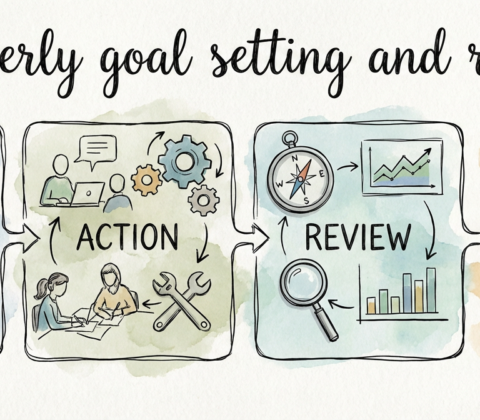
My Messy Journey with Quarterly Reviews (And Why I Keep Getting It Wrong)
The Fantasy vs. The Reality
Let me start with what I thought quarterly goal setting would look like: me, sitting with a perfectly organized planner, sipping coffee that stayed hot, methodically reviewing my accomplishments with the satisfaction of someone who had clearly figured out this whole “intentional living” thing. The reality? It’s currently 11:47 PM on March 31st, I’m hunched over my laptop with three different notebooks scattered around me, and I just realized I completely forgot about two of my Q1 goals until twenty minutes ago.
This is my fourth year attempting some version of quarterly planning, and I’m finally starting to accept that my process looks nothing like the pristine systems I see online. Here’s what I’ve learned that actually matters: the mess is part of the process, not evidence that I’m doing it wrong. Quarterly reviews aren’t about achieving some perfect state of productivity enlightenment. They’re about creating a rhythm that helps me course-correct before I’ve wandered too far off track.
So let me show you what my actual process looks like, including the parts where it completely falls apart and the moments when it actually works.

The Art of the Mid-Quarter Panic Check
I used to think quarterly reviews only happened at the end of quarters. This was my first major mistake. By March 31st, if something wasn’t working, it was too late to do anything about it except feel disappointed and promise to do better next time. Now I’ve built in what I call “panic checks” around week 6 of each quarter.
These aren’t formal reviews. They’re more like emergency triage sessions where I spread out whatever tracking system I was using (spoiler: it has usually changed at least twice by week 6) and ask myself the brutally honest question: “What am I pretending is working that absolutely isn’t?” Last quarter, this led me to abandon an elaborate morning routine that looked great on paper but required me to wake up at 5:30 AM. My night-owl biology was never going to sustain that.
The panic check also forces me to confront what I call “zombie goals” — the ones I wrote down with great intentions but have been essentially ignoring for weeks. Sometimes this means officially letting them go, which feels like failure but is actually just honesty. Sometimes it means figuring out why I’ve been avoiding them. Usually it’s because I made them too vague or too dependent on willpower instead of systems.
What I Actually Track (And What I’ve Given Up On)
I’ve tried tracking everything from daily water intake to the number of books I read to how many minutes I spent on creative work. Most of these experiments lasted about three weeks before I quietly stopped updating my spreadsheets and pretended they never existed. The metrics that have survived multiple quarterly cycles are the ones that either track themselves or require almost no effort to maintain.
Money goals track themselves through bank statements and budgeting apps. Project completion is binary — either I finished the website redesign or I didn’t. Relationship goals that I can tie to specific actions (like “text three friends I haven’t talked to in a while”) work better than vague intentions like “be more social.” The key insight here was realizing that if a goal requires me to remember to track it every day, I’m probably going to forget, get discouraged, and give up.
I’ve also learned to track what didn’t work and why. This feels weird, but it’s been incredibly valuable. I keep a running list of failed experiments: the meditation streak that lasted five days, the exercise routine that was too ambitious, the side project I started but never finished. Instead of pretending these didn’t happen, I try to extract lessons. The meditation failure taught me I need guided sessions, not silent ones. The exercise disaster showed me I need accountability, not just good intentions.
The Quarterly Debrief That Actually Helps
My quarterly review process has become something that looks more like a conversation with myself than a performance evaluation. I sit down with my notebook and work through four questions that have become surprisingly reliable guides.
First: What surprised me this quarter? This question catches things that don’t show up in goal tracking but often matter more than the goals themselves. Like discovering that I do my best creative work in coffee shops, not at my carefully arranged home office. Or realizing that I’m more likely to follow through on commitments when I make them public, even in small ways.
Second: What patterns am I noticing? This is where the messy, incomplete data actually becomes useful. I might not have tracked my energy levels every day, but I can usually spot patterns when I look back at three months of calendar entries and project notes. I consistently crash in energy around 3 PM. I have great weeks when I batch similar tasks together. I get derailed when I try to do too many different types of work in the same day.
Third: What do I need to stop pretending about? This is the hardest question and the most valuable one. It forces me to admit which goals I chose because they sounded impressive rather than because they actually mattered to me. It makes me confront which habits I keep trying to build despite clear evidence that they don’t fit my life right now.
Fourth: Based on everything above, what’s one thing I want to experiment with next quarter? Note that it’s one thing, not five things. And it’s an experiment, not a commitment carved in stone. This framing makes it easier to try something new without the pressure to get it perfect immediately.
Making Peace with Incomplete Data
The biggest shift in my approach has been accepting that I’ll never have complete data about my progress, and that’s actually fine. I used to think that meant my system was broken. Now I think it means my system is human.
There are weeks when I forget to check in with my goals entirely. There are months when my careful plans get derailed by life events I couldn’t predict. There are quarters when I realize halfway through that my goals were completely wrong for where I actually am in my life. None of this is a problem to solve, it’s just the context in which any meaningful goal-setting has to happen.
The quarterly rhythm gives me regular chances to course-correct without waiting for January 1st or some other arbitrary fresh start. It’s short enough that I can try experiments without feeling locked into them forever, but long enough for patterns to emerge and for small changes to add up to something noticeable.
I’m curious about what your experience has been with quarterly planning, especially the parts that didn’t work the way you expected. What have you discovered about yourself through the process of setting goals and then watching how you actually respond to them? What questions have you found most useful when reflecting on a quarter that didn’t go according to plan?
What I Learned From Tracking Every Creative Hour for 365 Days (Spoiler: Most Advice Is Wrong)
On January 3rd, I sat at my desk with a simple notebook and wrote “9:47 AM – started writing morning pages.” By December 31st, that notebook had turned into three filled journals documenting every creative session, failed experiment, and productive hour of the year. What I discovered challenged almost everything I thought I knew about building sustainable creative routines.
This wasn’t some grand experiment I planned. It started because I was frustrated with my inconsistent output and tired of productivity advice that felt like it was written by robots who never experienced creative blocks. I wanted real data about my own patterns, not someone else’s morning routine that worked for their completely different life.
The Myth of the Perfect Daily Routine
Every productivity guru sells the same story: find your perfect routine and stick to it religiously. Wake up at 5 AM, meditate, write for two hours, exercise. Rinse and repeat for creative success. After tracking 365 days of creative work, I can tell you this advice is not just wrong, it’s actively harmful.
My most productive writing happened at 2 PM on Tuesdays, 11 PM on Fridays, and 6 AM on random Sundays when I couldn’t sleep. My worst creative sessions consistently occurred during those sacred “morning hours” everyone swears by. When I forced myself into a rigid 6-8 AM writing block for six weeks straight, my output dropped by 40% compared to following my natural energy patterns.
The data showed something uncomfortable: sustainable creativity isn’t about discipline overpowering your natural rhythms. It’s about building flexible systems that work with your actual life, not the life you think you should have. Some days I wrote for four hours straight. Other days, fifteen minutes was all I had, and that was enough.
Why Most Creative Challenges Fail (And What Actually Works)
I attempted four different creative challenges this year. Three failed spectacularly. The successful one taught me something important about how habits actually form in creative work.
The failures: a 30-day poetry challenge (lasted 8 days), daily sketching for 100 days (made it 23 days), and writing 500 words every single day (crashed and burned at day 12). Each time, I started strong, missed a day or two, then abandoned the challenge entirely. The shame spiral was real and predictable.
The success was different. Instead of committing to daily output, I challenged myself to “show up creatively” for 90 days. Showing up could mean writing, editing, researching, organizing files, or even just reading in my genre for 15 minutes. The bar was intentionally low, but the key was defining “creative engagement” broadly rather than narrowly focusing on production.
This loose framework worked because it removed the perfectionist trap that kills most creative routines. Missing a day didn’t mean failure, it just meant tomorrow was another chance to show up. By day 60, I was naturally gravitating toward longer sessions because the habit of engaging was already established.
The Hidden Cost of Inspiration Addiction
Somewhere around month six, I noticed a disturbing pattern in my tracking data. I was spending more time consuming creative content than actually creating. Podcasts about writing, YouTube videos about productivity, books about the creative process. I had become addicted to learning about creativity instead of practicing it.
The numbers were embarrassing. For every hour I spent writing, I spent 2.3 hours consuming content about writing. I was substituting inspiration for perspiration and calling it research. This pseudo-work felt productive because I was learning, but my actual output told a different story.
The breakthrough came when I instituted a “creation before consumption” rule. No creative podcasts, articles, or videos until I had spent at least 30 minutes on my own work. This simple boundary shifted my relationship with inspirational content from escape back to genuine learning. I still consume creative content, but now it helps my practice rather than replacing it.
When Systems Break Down (And Why That’s Actually Good)
In August, my carefully built creative routine completely fell apart. I got sick, work exploded, family drama erupted, and for three weeks I barely touched any creative projects. Old me would have seen this as complete failure and probably given up on creative routines altogether.
Instead, I kept tracking what happened during the breakdown. I discovered that even when I couldn’t maintain my primary creative practice, I was still thinking creatively, making mental notes, and solving story problems in my head while dealing with other life demands. The creative muscle was still working, just differently.
When I returned to regular creative work, I didn’t restart from zero. Those three weeks of “non-creative” time had actually generated ideas and solutions that improved my writing when I resumed. I learned that sustainable creative routines need to be resilient, not rigid. They should bend without breaking, not demand perfection in an imperfect world.
The year taught me that building sustainable creative routines is less about finding the perfect system and more about developing a flexible relationship with your creative practice. It’s about showing up imperfectly, tracking what actually works rather than what should work, and being honest about the gap between aspiration and reality.
What patterns have you noticed in your own creative work? What assumptions about productivity might be worth questioning in your own practice?


The Creative Routine That Almost Killed My Creativity (And What Actually Worked)
January’s Grand Plan and Why It Collapsed by February
I started this year with a color-coded calendar that would have made productivity gurus weep with joy. Every creative block was scheduled: 6 AM to 7 AM for morning pages, 2 PM to 4 PM for deep work, 8 PM to 9 PM for reflection and planning. I had apps tracking my streaks, a bullet journal with elaborate habit trackers, and the kind of militant optimism that only comes from reading too many books about successful people’s morning routines.
By February 15th, I was staring at a mostly blank document and wondering why my creativity felt like a caged animal. The schedule that was supposed to unleash my potential had instead created a creative prison where every missed session felt like personal failure. I had confused structure with strangling. My creative work was suffocating under the weight of my own good intentions.
The breaking point came when I found myself writing blog post titles during my designated “morning pages” time because I was behind on content deadlines. The irony was thick enough to cut with a knife: my system for protecting creative time was actively preventing me from being creative. I closed the laptop that morning and didn’t open it again for three days.

March Through June: The Messy Season of Actually Making Things
After my rigid routine imploded, I spent months in what I now think of as creative freefall. No schedules, no trackers, no rules beyond “make something.” Some days I wrote for six hours straight. Other days I managed fifteen minutes between dinner prep and falling asleep on the couch. I started carrying a notebook everywhere and learned that my best ideas often came during grocery shopping or while waiting for the coffee to brew.
This season produced some of my worst work and some of my best. I wrote three terrible short stories, started a podcast that lasted exactly four episodes, and filled two entire notebooks with ideas that went absolutely nowhere. But buried in all that creative mess were the seeds of projects that would actually matter. The novel I’m still working on was born during a random Wednesday afternoon writing session that started because I was avoiding laundry.
What I discovered during these months was that my creativity operates more like a river than a machine. It has natural flows and dry spells, unexpected depths and shallow periods. The key wasn’t controlling it but learning to work with its rhythms. Some weeks I was a creative powerhouse. Other weeks I could barely string together coherent sentences. Both were necessary parts of the process.
The Summer Experiment: Following Energy Instead of Clocks
By July, I was ready to try building structure again, but this time around energy patterns instead of arbitrary time blocks. I spent two weeks tracking not just when I worked, but how I felt during different creative tasks. The results were illuminating and slightly embarrassing. My peak creative energy happened between 10 PM and midnight, exactly when every productivity expert says you should be winding down for bed.
I also discovered that my brain needed at least twenty minutes of complete mental wandering before it would produce anything interesting. Those morning pages everyone swears by? Useless for me until I’d already been awake for several hours. But give me a notebook and a cup of coffee after dinner, and I could generate ideas until my hand cramped from writing.
The energy-based approach wasn’t without its challenges. Late-night creative sessions meant I was often tired the next day, and my schedule became nearly impossible to explain to other people. But the quality of my work improved dramatically because I was finally working with my natural rhythms instead of fighting them.
Fall Adjustments: Building Flexibility Into Structure
September brought the realization that I needed some structure to prevent my energy-based approach from turning into creative chaos. The solution wasn’t a rigid schedule but what I started calling “flexible anchors.” I identified three non-negotiable creative practices that could happen at different times and in different ways depending on what life threw at me.
First anchor: fifteen minutes of writing every day, even if it was terrible. This could happen on my phone during lunch, in my notebook before bed, or occasionally dictated into voice memos while walking the dog. The medium didn’t matter. The consistency did. Second anchor: one substantial creative session per week, at least two hours long, when I could dive deep into meaningful work. Third anchor: weekly creative review, where I looked at what I’d produced and planned what came next.
These anchors survived busy work weeks, family emergencies, and the inevitable creative doldrums that hit every few months. More importantly, they gave me a sense of forward momentum without the crushing weight of elaborate systems. When I missed a day or had a terrible writing session, the anchors reminded me that creative work builds up over time. It doesn’t depend on perfect daily performance.
December Reflections: What Survived the Year
As I write this in the final weeks of December, I’m surrounded by evidence of a year spent learning to be creative sustainably. There are notebooks filled with terrible first drafts, a folder of abandoned projects that taught me important things about my own process, and a small stack of finished pieces that I’m genuinely proud of. The metrics look nothing like what I planned in January, but the creative growth is undeniable.
The routine I’ve settled into looks almost nothing like the color-coded calendar I started with. It’s messier, more intuitive, and heavily dependent on my willingness to adjust course when something isn’t working. But it’s also the first creative practice I’ve maintained for more than a few months without burning out or giving up entirely.
What I’ve learned is that sustainable creativity isn’t about finding the perfect system. It’s about developing the self-awareness to know what you need and the flexibility to adapt when those needs change. Some days I need rigid structure to push through resistance. Other days I need complete freedom to follow an unexpected creative thread. The skill isn’t in choosing one approach but in recognizing which one serves the work best in any given moment.
I’m curious about your own creative experiments this year. What routines have you tried and abandoned? What unexpected discoveries have you made about your own creative rhythms? Drop me a line and tell me about your creative failures and successes. I’m always collecting stories about how people actually work, not how they think they should work.

The Books That Broke My Brain This Year (And Why I’m Still Picking Up the Pieces)
When Everything You Think You Know About Motivation Gets Flipped
I spent the first half of this year absolutely convinced I understood how change worked. Read the right books, implement the systems, track the habits, celebrate the small wins. Daniel Pink had taught me about autonomy, mastery, and purpose. James Clear had shown me the compound effect of tiny improvements. I was swimming in productivity porn and loving every minute of it.
Then I picked up “The Myth of Normal” by Gabor Maté, and he basically took everything I thought I knew about human behavior and set it on fire. Maté doesn’t just challenge the idea that we can think our way into better lives. He destroys it. He argues that most of our struggles with motivation, focus, and self-control aren’t personal failings or system problems. They’re trauma responses. Our bodies and minds trying to protect us from a world that taught us we weren’t safe being ourselves.
I remember sitting in my kitchen at 2 AM, three weeks into reading this book, having what can only be described as an existential crisis. Every productivity hack I’d ever tried suddenly felt like putting a bandaid on a broken bone. The voice in my head that constantly pushed for more optimization, better systems, cleaner metrics? Maté was saying that voice might be the problem, not the solution. I closed the book and stared at my carefully color-coded habit tracker, wondering if I’d been trying to engineer my way out of being human.
The Science Book That Made Me Question Science
“The Trouble with Physics” by Lee Smolin should have been a straightforward read about theoretical physics. Instead, it became a meditation on how even our most rigorous institutions can get trapped in their own assumptions. Smolin, himself a theoretical physicist, argues that string theory has dominated physics for decades not because it works, but because it’s become intellectually fashionable. Entire careers get built on pursuing elegant mathematics that may have nothing to do with reality.
What hit me wasn’t the physics. It was recognizing the same pattern in my own field. How many marketing strategies have I pursued because they sounded sophisticated rather than because they actually moved the needle? How many times have I chosen the complex solution over the obvious one because complexity felt more professional? Smolin’s book forced me to face an uncomfortable truth: expertise can become its own trap when we start optimizing for looking smart rather than being effective.
The really unsettling part was realizing this applies to everything. Personal development, business strategy, even relationships. We often choose the approach that makes us feel knowledgeable rather than the one that actually works. Reading Smolin felt like getting glasses for the first time and discovering how much I’d been squinting at the world without realizing it.
Fiction That Rewired My Understanding of Time
“Klara and the Sun” by Kazuo Ishiguro wasn’t supposed to teach me anything practical. It’s literary fiction about an artificial friend observing a family from the margins. But Ishiguro’s choice to tell the story from Klara’s perspective created something I wasn’t prepared for: a completely different relationship with time and attention.
Klara notices everything because she doesn’t take anything for granted. She observes the way sunlight moves across a room with the same intensity that she watches human emotions play across faces. There’s no hierarchy in her attention. The mundane and the profound get equal weight. Reading through her eyes for 300 pages did something strange to my brain. It slowed me down in a way that felt almost physical.
I started noticing things I’d been walking past for years. The way my neighbor’s dog always sniffs the same corner of the fence. How the light in my office changes throughout the day. The particular expression my partner gets when she’s thinking through a problem. None of this was profound or life-changing in any dramatic sense. But it shifted something fundamental about how I move through the world. Ishiguro didn’t teach me to be more mindful. He taught me that mindfulness might be less about meditation techniques and more about approaching ordinary moments with genuine curiosity.
The Technical Manual That Changed How I Think About Everything
“Thinking in Systems” by Donella Meadows is supposedly about systems theory. In practice, it’s about recognizing that almost everything we try to change exists within webs of relationships that we rarely see clearly. Meadows shows how pushing on one part of a system often creates unexpected reactions somewhere else. She explains why quick fixes usually make things worse in the long run, and why the most effective changes often happen at points that seem completely unrelated to the problem we’re trying to solve.
This book didn’t just change how I approach work problems. It changed how I think about everything from family dynamics to political debates. That project that keeps getting stuck? Instead of pushing harder on the obvious bottleneck, I started looking for the incentive structures and feedback loops that might be creating the bottleneck in the first place. That relationship conflict that keeps recurring? Instead of focusing on who’s right, I started asking what patterns we might be unconsciously maintaining.
The most practical insight was Meadows’ idea that the highest leverage point in any system is the paradigm or shared idea out of which the system comes. You can change policies, processes, and structures all day long. But if the underlying assumptions don’t shift, the system will keep producing the same results. This sounds abstract until you start seeing it everywhere. Every stuck project, every repeated argument, every habit you can’t seem to change probably has a paradigm problem hiding underneath.
What These Books Left Me With
I started this year thinking I was collecting tools and insights. I ended it realizing I was tearing down assumptions I didn’t even know I had. These books didn’t give me answers as much as they gave me better questions. They didn’t make me more confident in my approaches. They made me more curious about what I might be missing.
The strange thing about reading books that genuinely shift your thinking is that you can’t unsee what they’ve shown you. Maté’s trauma lens, Smolin’s institutional critique, Ishiguro’s attention training, Meadows’ systems thinking. They’ve become permanent parts of how I process new information. Sometimes this feels overwhelming. Most of the time it feels like finally having the right prescription glasses after years of squinting.
I’m curious what books have done this for you. Not the ones that confirmed what you already believed or gave you better ways to express your existing thoughts. The ones that made you question things you took for granted. The ones that left you sitting in your kitchen at 2 AM, staring at your carefully constructed assumptions and wondering what else you might have gotten wrong.
The Books That Rewired My Brain (And Why They Might Rewire Yours Too)
When “Bird by Bird” Taught Me That Terrible First Drafts Are Actually Perfect
I used to think good writers sat down and produced polished prose in one go. Anne Lamott’s “Bird by Bird” destroyed that illusion completely, and I’ve never been more grateful for literary destruction. Her concept of “shitty first drafts” didn’t just give me permission to write badly. It showed me that writing badly is the actual process, not a failure of process.
This book is for anyone who has ever stared at a blank page and felt paralyzed by the need to make it perfect immediately. Lamott walks you through the reality of writing: the mess, the false starts, the daily practice of showing up even when inspiration has left the building. She talks about writing the way a master craftsperson talks about their trade. With reverence for the work itself, not just the outcome.
What changed my thinking wasn’t just her writing advice, though that’s gold. It was her approach to creative work in general: that the point isn’t to produce something perfect, but to engage authentically with the process. She taught me that the willingness to be bad at something initially is courage, not laziness or lack of standards.
How “The Gifts of Imperfection” Made Me Stop Performing My Life
Brené Brown’s research on vulnerability hit me like a truck, but not in the way you might expect. I picked up “The Gifts of Imperfection” thinking it would be another self-help book about accepting your flaws. Instead, it completely dismantled my understanding of what strength actually looks like.
This book is for the achievers, the people-pleasers, the ones who have built their entire identity around being competent and having it together. Brown doesn’t just tell you that vulnerability is strength. She shows you the research proving that the people who live the most wholehearted lives are the ones willing to show up without guarantees of how they’ll be received.
The moment that rewired my brain was reading her definition of courage: telling the story of who you are with your whole heart. Not the edited version, not the highlight reel, but the actual messy reality of being human. This book taught me the difference between sharing strategically and sharing authentically, and why the latter is the only path to real connection.
“Atomic Habits” Revealed Why My Motivation Always Failed Me
James Clear’s “Atomic Habits” arrived in my life when I was exhausted from a cycle of starting ambitious projects with tremendous enthusiasm and then watching them fizzle out within weeks. I thought the problem was my lack of willpower or discipline. Clear showed me I was solving the wrong problem entirely.
This book is essential reading for anyone who has ever wondered why they can maintain some habits effortlessly while others seem impossible, no matter how motivated they feel. Clear breaks down the actual mechanics of habit formation in a way that makes you realize how much energy you’ve been wasting fighting against your own psychology instead of working with it.
The breakthrough insight was understanding that habits aren’t about motivation or discipline. They’re about designing systems that make the desired behavior easier and the undesired behavior harder. He showed me how small environmental changes create massive behavioral shifts over time. My productivity didn’t improve because I became more disciplined; it improved because I learned to remove friction from the things I wanted to do consistently.
But the deeper impact was philosophical: Clear taught me to think in systems rather than goals, in processes rather than outcomes. This shift in perspective has influenced everything from how I approach creative projects to how I think about personal growth. Instead of asking “What do I want to achieve?” I now ask “What kind of person do I want to become, and what systems would that person have?”
Why “Digital Minimalism” Made Me Question Everything About My Relationship with Technology
Cal Newport’s “Digital Minimalism” found me during a period when I felt constantly scattered, always busy but never quite sure what I was actually accomplishing. I expected a book about managing screen time; instead, I got a philosophical framework for thinking about technology’s role in a meaningful life.
This book is valuable for anyone who feels like technology is using them more than they’re using it. Newport doesn’t advocate for abandoning technology entirely. He presents a framework for being intentional about which technologies serve your values and which ones are simply filling time or feeding on your attention for someone else’s profit.
What changed my thinking was Newport’s argument that we’ve outsourced too much of our mental life to digital tools without considering what we’re trading away. He showed me how constant connectivity fragments not just our attention, but our capacity for deep thought, sustained focus, and genuine solitude. The book taught me to see boredom not as a problem to solve immediately, but as the space where creativity and reflection happen.
The Real Impact: How These Books Work Together
These four books didn’t just change individual aspects of how I think. They created a compound effect that shifted my entire approach to creative work and personal development. Lamott taught me to embrace imperfection as part of the process. Brown showed me that authenticity requires courage, not perfection. Clear gave me the tools to build systems that support who I want to become. Newport helped me create the mental space necessary for all of this deeper work to happen.
Together, they’ve helped me understand that sustainable change happens not through dramatic transformations or sheer force of will, but through small, consistent actions aligned with clear values. They’ve taught me that the goal isn’t to optimize myself into some idealized version, but to create conditions where authentic growth can happen naturally.
I’m curious about the books that have shifted your perspective. Not just the ones you enjoyed, but the ones that made you see yourself or your work differently. What did you think you knew that turned out to be completely wrong? What book arrived at exactly the right moment to challenge something you needed to question?


The Ugly Truth About My Failed Projects (And What They Actually Taught Me)
The Garden That Became a Cautionary Tale
Last spring, I decided I was going to transform our sad patch of backyard into a thriving vegetable garden. I ordered heirloom seeds, watched YouTube videos about companion planting, and sketched elaborate garden layouts on graph paper. I was going to be one of those people who casually mentions harvesting their own tomatoes for dinner.
Three months later, I had seven struggling tomato plants, a cucumber vine that never produced a single cucumber, and enough zucchini to supply a small village (because apparently zucchini grows whether you know what you’re doing or not). The raised beds I’d built were too shallow. I’d planted things too close together. I hadn’t considered that the big oak tree would shade half the garden by midsummer.
But here’s what happened next that surprised me. Instead of abandoning the whole thing, I started keeping a detailed notebook of what wasn’t working. I measured the actual sunlight hours in different spots. I researched why my bean plants looked anemic. I talked to neighbors who’d been gardening for decades. The garden still looked terrible, but I was learning at a pace that felt almost aggressive.
That notebook became the foundation for this year’s much more successful garden. More importantly, it taught me something about how failure actually works when you lean into it instead of running away from it. The problem wasn’t that I failed. The problem was that I almost let that failure become invisible instead of useful.

Why We Hide Our Process Disasters
We live in a culture of highlight reels, even in our own heads. When I tell people about projects, I tend to jump straight to the lessons learned, the wisdom gained, the growth that happened. I skip over the part where I spent two weeks building something that didn’t work at all, or where I had to completely start over because my initial approach was fundamentally flawed.
There’s this weird shame around showing your work when your work looks messy. I’ve noticed this especially with creative projects and learning new skills. We want to present the polished version, the story where everything makes sense in retrospect. But that cleaned-up narrative actually hides the most valuable part of the process: the real-time problem solving, the dead ends that taught you something important, the moment when you realized your entire approach needed to change.
I started keeping what I call a “process notebook” for any project that matters to me. Not a journal with feelings and reflections, but a working document where I record what I tried, what happened, and what I’m thinking about trying next. The garden notebook was my first serious attempt at this, and it changed how I approach failure entirely.
When you document your failures in real time, they stop being personal shortcomings and start being data points. That shift is everything. Instead of “I’m bad at this,” it becomes “this approach didn’t work under these conditions.” Instead of avoiding the thing that didn’t work, you start getting curious about why it didn’t work and what might work better.
The Programming Project That Ate Three Months
Last year, I decided to build a simple web application to help me track my reading habits. I’d been learning to code for about six months, and this felt like a perfect beginner project. I sketched out the features I wanted: a way to log books, rate them, see reading statistics over time, maybe add some social features later.
I spent three months building something that technically worked but was so slow and buggy that using it was painful. I’d built it using a framework I barely understood, with a database structure that made simple queries complicated, and a user interface that looked like it was designed by someone who had never used a website before.
The traditional advice would be to scrap it and start over. But instead, I kept detailed notes about every problem I encountered. Why was the loading time so slow? What made the database queries inefficient? Why did the interface feel so confusing to navigate? I documented not just what was broken, but my theories about why it was broken and what I might try differently.
Those notes became a roadmap for learning. Each problem pointed to a specific skill I needed to develop or concept I needed to understand better. The failed project became a curriculum designed specifically for the gaps in my knowledge. Six months later, when I rebuilt the application from scratch, I had a much clearer sense of what I was doing and why.
But the real breakthrough was realizing that the “failed” version wasn’t actually a failure. It was an expensive but effective way to learn what I didn’t know. The problem was that I almost threw away all that expensive learning because I was embarrassed by how rough the end product looked.
Making Failure Visible and Useful
Here’s what I’ve learned about turning project failures into project fuel: you have to document them while they’re happening, not after they’re resolved. The insights that matter most are the ones you have in the middle of being confused, when you’re trying to figure out what’s not working and why.
My process notebook isn’t fancy. It’s usually just a simple document with three sections: what I tried, what happened, and what I’m thinking about next. But I’ve started treating it as seriously as I treat the actual project work. When something doesn’t go according to plan, that gets documented with the same attention I give to the things that do work.
The magic happens when you can look back at weeks or months of these entries and see patterns. You start to notice the types of problems that trip you up repeatedly. You see which of your instincts tend to be helpful and which ones lead you astray. You get better at recognizing early warning signs that your approach might need adjustment.
More importantly, you start to see failure as information rather than judgment. When you have a detailed record of your thinking process, it becomes obvious that most failures aren’t about lacking ability or intelligence. They’re about missing information, making reasonable assumptions that turned out to be wrong, or trying to solve a problem before you fully understood it.
The Collaboration You Didn’t Know You Needed
The most unexpected benefit of documenting my project failures has been how much it’s helped other people. When I share these process notes with friends or colleagues, they often recognize their own struggles in my detailed accounts of what didn’t work and why.
There’s something powerful about seeing someone else’s real-time problem solving, complete with the false starts and course corrections. It normalizes the messiness that’s actually part of learning anything worth learning. It shows what persistence actually looks like day to day, which is much less glamorous and much more incremental than we tend to imagine.
I’ve started thinking of my process notebook as a collaboration with future me, but also with anyone else who might be working on similar challenges. The detailed record of what I tried and what happened becomes a resource that goes beyond just my own learning.
What failures are you sitting on that might actually be disguised as valuable data? I’m still figuring this out myself, but I’m curious about your own experiments with making failure useful rather than just painful. The process is messier than I expected, but that messiness seems to be where the actual learning lives.


Your Creative Routine Is Probably Too Ambitious (And That’s Why It’s Not Working)
The Beautiful Lie We Tell Ourselves About Creative Routines
I’ve watched dozens of writers, artists, and creators design elaborate morning routines that would make a monastery jealous. They wake at 4:30 AM, meditate for twenty minutes, journal three pages, brew artisanal coffee, light candles, arrange their workspace just so, and then sit down to create for exactly ninety minutes before the world intrudes. It sounds magical, doesn’t it? The problem is that by week three, they’re sleeping through alarms and feeling like failures.
Here’s what nobody wants to admit: most sustainable creative routines look embarrassingly ordinary. Mine certainly does. I write in my pajamas at my kitchen table, often with yesterday’s dishes still in the sink. I don’t light candles. I don’t have a special notebook. Some days I write for fifteen minutes between conference calls, other days for three hours on a Saturday morning. The routine isn’t Instagram-worthy, but it’s been running for four years now.
The uncomfortable truth is that we’re designing routines for the person we wish we were rather than the person we actually are. We imagine ourselves as the type who naturally wakes before dawn, who has perfect discipline, who can maintain complex systems without effort. But sustainable creativity isn’t about becoming a different person. It’s about working with your actual energy patterns, your real schedule, and your genuine constraints.
Why Starting Small Feels Like Giving Up (But Isn’t)
When I suggest starting with just five minutes of creative work daily, I can see the disappointment in people’s faces. Five minutes feels inadequate, almost insulting. How can you write a novel in five minutes? How can you develop artistic skills? How can you make any real progress? This reaction reveals something about how we think about creative work: we believe that if we’re not suffering, we’re not really trying.
But here’s what I’ve learned from my own failed attempts at grand creative routines: those five minutes compound. Not in the productivity-guru way where everything becomes exponential growth charts and optimization hacks, but in a quieter, more fundamental way. Five minutes daily means you touch your creative work 365 times a year. That’s 365 opportunities to have an idea, solve a problem, or maintain momentum. Compare that to the elaborate two-hour routine you’ll abandon after three weeks.
The resistance to starting small often comes from a deeper fear: that maybe we don’t actually want this as much as we claim to. If we can only manage five minutes, perhaps we’re not serious artists or writers. But I’ve seen prolific creators emerge from tiny, consistent practices far more often than from grand gestures. The writer who spent two years writing one paragraph each morning before work. The painter who kept a small sketchpad on their nightstand. The musician who hummed melodies into their phone during lunch breaks.
Starting small isn’t giving up on your ambitions. It’s acknowledging that sustainable creativity is built through repetition, not intensity. Those five minutes teach your brain that creative work is a normal part of your day, not a special occasion that requires perfect conditions.
The Maintenance Phase Nobody Talks About
Here’s something that surprised me about sustainable creative routines: they get boring. After the initial excitement wears off, after you’ve established the habit and started seeing progress, you enter what I call the maintenance phase. This is where most advice about creative routines stops, but it’s where the real work begins.
In the maintenance phase, your routine becomes as ordinary as brushing your teeth. You don’t get a dopamine hit from doing it anymore. You don’t feel particularly inspired or motivated. You just do it because it’s Tuesday and Tuesday means you write. This is actually a good sign, though it doesn’t feel like one. When something becomes automatic, it stops requiring willpower, which means it can survive busy weeks, bad moods, and life disruptions.
But boring doesn’t mean static. I’ve learned to build small experiments into my routine to prevent stagnation. Sometimes I write in a different location. Sometimes I try a new format or technique. Sometimes I collaborate with someone else. These aren’t major overhauls that risk breaking the habit, just minor variations that keep things interesting without requiring a complete restart.
The maintenance phase is also when you start seeing the real benefits of consistency. Your skills improve gradually rather than in dramatic leaps. You develop a body of work almost without noticing. You begin to trust that you can rely on yourself to show up. This self-trust becomes the foundation for taking bigger creative risks, because you know you’ll be there tomorrow to build on whatever happens today.
When Your Routine Breaks Down (And How to Get Back Up)
Let me share something that might make you feel better about your own struggles: I’ve broken my creative routine at least twenty times over the past four years. Illness, work deadlines, family emergencies, pure exhaustion, and sometimes just the inexplicable desire to watch Netflix for three weeks straight instead of writing. Each time, I felt like I was starting over from zero.
But here’s what I discovered: you’re never actually starting from zero. The neural pathways are still there. The skills haven’t evaporated. The identity as someone who creates hasn’t disappeared. Getting back to your routine after a break is more like riding a bike after winter storage than learning to ride for the first time. It might feel wobbly at first, but muscle memory kicks in faster than you expect.
The key is to restart smaller than you think you need to. When I return to writing after a break, I don’t try to jump back into hour-long sessions. I start with one sentence. Literally one sentence. It sounds ridiculous, but it works because it removes the pressure and resistance that caused the break in the first place. Once I’ve written one sentence for a few days, two sentences feels manageable. Then a paragraph. Then I’m back to my normal routine without the shame spiral that usually accompanies breaking habits.
I’ve also learned to plan for breaks. Instead of seeing routine disruptions as failures, I now view them as maintenance issues. Cars need tune-ups, websites need updates, and creative routines need occasional recalibration. Expecting perfection guarantees disappointment. Expecting breaks and planning for restarts creates resilience.
Building Something That Survives Contact with Reality
The most sustainable creative routines are deliberately imperfect. They have built-in flexibility rather than rigid requirements. They account for sick days, busy seasons, and low-energy periods. They prioritize consistency over intensity, progress over perfection, and showing up over elaborate preparation.
Your routine should fit your actual life, not your idealized version of it. If you’re not naturally a morning person, don’t build a dawn routine. If you have small children, don’t plan for uninterrupted two-hour blocks. If you travel frequently for work, don’t create something that only works at home. Design for your constraints, not against them.
The goal isn’t to create the perfect creative routine. It’s to create one that’s so simple, so adaptable, and so aligned with who you actually are that you’ll still be doing it a year from now. That might mean five minutes instead of two hours. It might mean voice memos instead of handwritten journals. It might mean creating during lunch breaks instead of sacred morning hours. Whatever works is what works.
I’m curious about your own experiments with creative routines. What worked? What didn’t? What surprised you about the process? The messy middle parts of building sustainable practices are where the real learning happens, and I’d love to hear about your version of pajama-clad kitchen table creativity.